SEOs Are Becoming Hostages to Their Own Tools as Platforms Crack Down on AI Slop

Artificial intelligence was supposed to raise the bar on content quality. Instead, the conversation has swung in the opposite direction entirely: the internet is being flooded with "AI slop" — low-quality, mass-produced content churned out by artificial intelligence — and platforms have stopped looking the other way. Search Engine Journal contributor Greg Jarboe notes that the issue cuts especially deep for SEO professionals, since many practitioners are using the very tools platforms are now cracking down on as a shortcut. The logic is simple: if AI makes it easier to produce more content, it just as easily makes it easier to produce more bad content. Platforms have noticed, and they've started pushing back.
In a recent post, Kevin Indig floated the idea of "slop antibodies" — internal systems companies should build to filter out low-quality AI output before it ever reaches users. The problem, he argues, isn't the tools themselves but the people using them as production machines rather than editorial assistants. That same day, New York Times reporter Tiffany Hsu reported that Spotify had removed 75 million "mass-uploaded, duplicate, and other 'spam' tracks," while LinkedIn had ramped up its detection systems. A few days earlier, Wired's Reece Rogers wrote that communities like Reddit and Stack Overflow had rolled out rules restricting AI-generated answers, since unchecked low-quality content was dragging down user engagement.
Jarboe has watched this movie before. Fifteen years ago, content farms churned out human-written spam at an industrial scale. Google didn't ban people from writing — it refined the systems that reward quality content. Google's guidance on AI-generated content today makes the same point: the question isn't whether a machine wrote the text, but whether it's useful, trustworthy, and good.
Jarboe offers an example from his own career: his team once used the same tool to optimize and distribute press releases for a financial newsletter. One release about a low-cap stock drove a wave of new subscribers; another, marking the publication's anniversary, generated nothing. Same client, same agency, same tool — the only variable was the content itself. Readers engaged with one and ignored the other. That, Jarboe says, confirms his core point: tools amplify whatever you feed into them, but they can't fix the content on their own.
Which is why the debate over slop is really a debate about judgment. The more powerful the tools become, the greater the responsibility falls on the people wielding them. Jarboe likens it to the old argument between Henry David Thoreau and Ralph Waldo Emerson: Thoreau warned that people risk becoming slaves to their own tools, while Emerson insisted that if you build something genuinely better, the world will find its way to your door. In today's AI era, Jarboe argues, both views still hold true.
Jarboe offers five practical recommendations for SEOs. First, use AI for analysis, not for writing — it can cluster topics, spot gaps, or compile sources, but a human still needs to make the final call. Second, fact-check everything: AI sounds confident even when it's wrong, so every claim should be checked against a named source. Third, optimize pages for AI Overviews — the AI-generated summary blocks — since clear explanations, credible links, and concise answers boost visibility there. Fourth, publish less but better: volume isn't a strategy, rigor is. Fifth, add elements AI can't replicate — named experts, original quotes, proprietary data, and firsthand analysis are what separate real content from artificial content.
Platforms have drawn a line: they're rejecting slop, not AI. SEOs who use artificial intelligence as a shortcut will find themselves on the wrong side of that line. Those who use it as an assistant will keep building stronger, better solutions — and when the work is genuinely good, the world still finds its way to your door.
Related articles

The Difference Between Using AI and Being AI-Native
Using artificial intelligence tools doesn't automatically make your company AI-native — the real difference isn't about technology at all, but about how work is designed, who it's assigned to, and how it's measured.

Boosting Team Productivity with an AI Social Media Assistant
How an AI social media assistant helps social teams automate repetitive tasks, track trends, and make strategic decisions — based on Sprout Social's experience.
Instagram Launches First Draft Feature for Reels
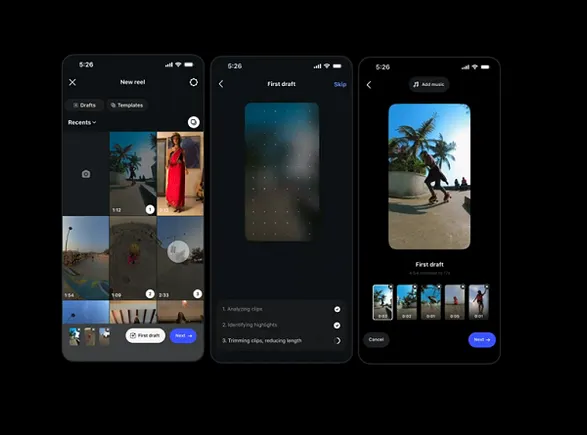
Instagram has rolled out a new First Draft feature that automatically picks the best moments from multiple video clips, giving users a ready-made starting point for building Reels.