Boosting Team Productivity with an AI Social Media Assistant

Social media managers today juggle a dizzying array of tasks at once — from responding to customers to tracking ad campaigns. With markets shifting so quickly, using artificial intelligence in social media has stopped being a luxury and become a competitive necessity. There are simply too many tasks, leaving little room for strategic thinking or creative ideas. This is exactly the burden an AI assistant lifts, taking over repetitive, time-consuming work so teams can focus on strategy instead. According to Sprout Social's 2025 Index study, 54% of marketing leaders see AI as key to scaling their teams, while 97% say knowing how to use AI has become critical to a marketer's day-to-day work.
The real job of an AI assistant is to serve as a reliable digital helper working quietly in the background, streamlining processes and boosting efficiency. For instance, it analyzes billions of data points on customer interactions, audience behavior, and other metrics. Through social listening, AI delivers valuable insights to marketing, product, and sales teams, presenting its findings as visual reports that capture key metrics like sentiment, view counts, and topic frequency. That, in turn, lets brands respond in a timely, personalized way even during the busiest seasons — the year-end holiday season, for example. According to Sprout Social's Q3 2026 Pulse survey, 86% of social media users plan to rely on social media as much as or more than in 2025 to get answers to customer service questions this holiday season.
Sprout Social's own AI assistant, Trellis, is deeply embedded across the company's unified social intelligence ecosystem. Through Trellis Chat's Listening mode, teams can simply ask which topics are trending, spot emerging trends, monitor brand reputation, analyze competitor activity, and conduct market research faster and more affordably than with traditional methods. The Analyze mode, meanwhile, brings together scheduled content calendars, published-post performance, listening results, and inbox messages in one place, compressing analysis that would otherwise take hours of manual work into minutes. Sprout Social's Social Media Performance Report found that 63% of marketers admit manual work keeps them from focusing on higher-value tasks, yet the 2026 Content Strategy Report shows only 40% of marketers currently use AI tools for performance analysis. On top of that, NewsWhip by Sprout Social continuously monitors media coverage and flags brand mentions in real time, while Trellis Studio turns recurring analytical work into automated tasks called "Skills" that run on a set schedule.
Beyond Trellis, Sprout Social's integrations also bring other AI assistants into play. Canva's AI tools — Magic Write, Magic Media, and Magic Edit — help with writing copy, generating graphics, and editing images, and its integration with Sprout lets teams move design projects straight into Compose without any download-and-upload cycle. Salesforce's Agentforce for Service Cloud, meanwhile, uses social data coming from Sprout to give full context on a customer's prior interactions — letting agents deliver faster, better service without toggling between multiple windows.
In practice, this approach is delivering real results. According to Andrew Bridgeman, Chief Digital Officer at Droput.tv, meaningfully tracking comments on every post would be "nearly impossible" without Trellis. Stella Hernandez, a program manager at IPSY, says the performance summaries and sentiment analysis Trellis generates have proven highly valuable to her team. Nick Fischer, a digital public affairs analyst at Coca-Cola, notes that during a crisis, NewsWhip let him pinpoint which articles were actually being shared on social media and add the context needed around them. These examples show that AI assistants deliver equally practical benefits for teams across content planning, social listening, crisis management, and trend tracking.
When rolling out an AI assistant, it's essential to use it to support the team, not replace it. That starts with clearly defining which tasks AI will handle and which decisions stay with people — high-level strategy, personal communication, and final approvals should always remain in human hands. From there, it's worth running a small pilot project to identify the AI's strengths and weaknesses in real workflows, testing its resilience under load before the busy season hits, and monitoring its performance consistently after rollout. Only this kind of step-by-step approach turns AI from a temporary experiment into a lasting, dependable partner.
In the end, an AI social media assistant becomes a quiet partner working behind the scenes, making the team more proactive, creative, and effective. Instead of getting buried in repetitive tasks, teams finally have time to spot trends, uncover audience insights, and streamline content creation — leading to smarter, more data-driven decisions aligned with broader marketing goals.
Related articles
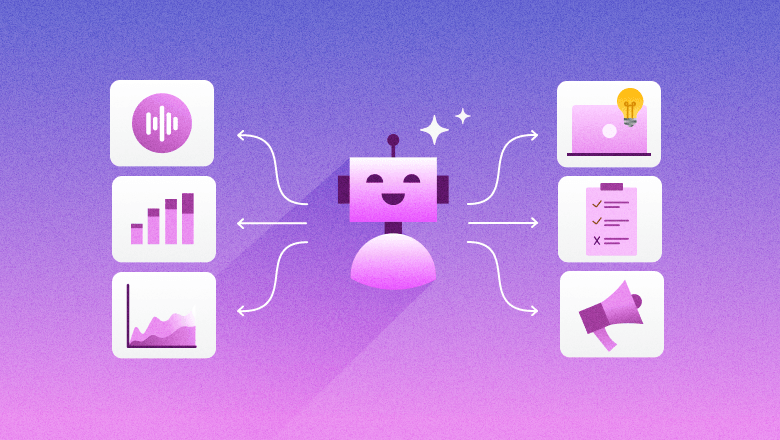
The Difference Between Using AI and Being AI-Native
Using artificial intelligence tools doesn't automatically make your company AI-native — the real difference isn't about technology at all, but about how work is designed, who it's assigned to, and how it's measured.
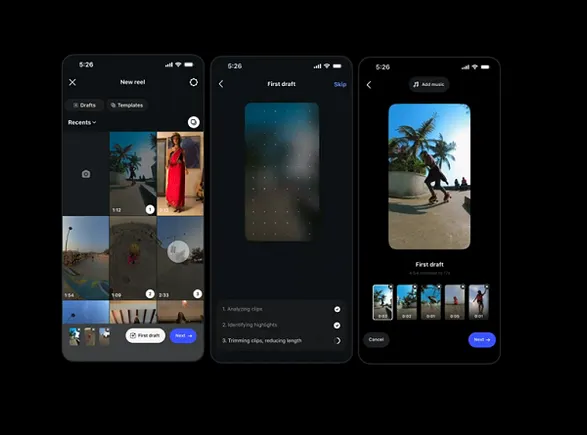
Instagram Launches First Draft Feature for Reels
Instagram has rolled out a new First Draft feature that automatically picks the best moments from multiple video clips, giving users a ready-made starting point for building Reels.

SEOs Are Becoming Hostages to Their Own Tools as Platforms Crack Down on AI Slop
Spotify removed 75 million spam tracks and LinkedIn beefed up its detection systems, part of a growing platform-wide crackdown on AI slop. Search Engine Journal's Greg Jarboe urges SEO professionals to treat artificial intelligence as an assistant, not a shortcut.