OpenAI Greenlights Health and Finance Ads in ChatGPT
OpenAI has significantly relaxed its rules for placing health and finance advertising on ChatGPT, according to a new study from SE Ranking. The research found that ChatGPT served healthcare-category ads on 28.69% of commercial queries — more than 10 times higher than Google AI Mode's rate of just 2.64%.
In April, OpenAI described the loosened ad rules as a move toward "a clearer approach": topics touching on medical, legal, and financial advice are no longer automatically blocked from advertising. Only genuinely sensitive topics — personal mental and physical health — remain shielded from ads. The company's ad policy page, updated August 10, lays out two separate rules: where ads can appear, and who is allowed to buy them. Under the second rule, advertisers in finance, healthcare, and legal services are reviewed and approved individually and manually by OpenAI.
In healthcare, permitted categories include medical insurance, dental services, supplements, vision products, medical screenings, and urgent care. Legal advertising works the other way around: aside from general legal-education content, ads for litigation and legal advice are banned outright. Political advertising is prohibited in every case. Since its initial announcement in February, the policy page has been updated three times, most recently on August 11, when the UK, Mexico, Brazil, Japan, and South Korea were added as pilot markets.
In its study, SE Ranking analyzed 50,006 commercial queries across 20 verticals in the US on July 23 — ads appeared in 12,974 of them, or 25.94%. Notably, the "News and Politics" category also showed a 28.76% ad rate, though the study notes many of these were commercial offers like newspaper and newsletter subscriptions rather than political ads. The research also found that in 14.35% of cases where an ad appeared, its relevance to the user's actual query was barely better than what a random query would produce — a figure that ranged from just 2.6% in the pets category to 54.2% in news and politics.
The author cautions that these numbers alone don't prove OpenAI's safeguards aren't working — an ad appearing alongside a commercial query doesn't necessarily mean the company's placement rules were violated. Still, OpenAI has updated those rules four times in the past five months, most recently on August 10, when housing and job listings were added as a category. Such frequent changes create a real headache for advertisers: a category that's closed when a media plan is drawn up can end up open by the time a campaign launches — or vice versa.
Related articles
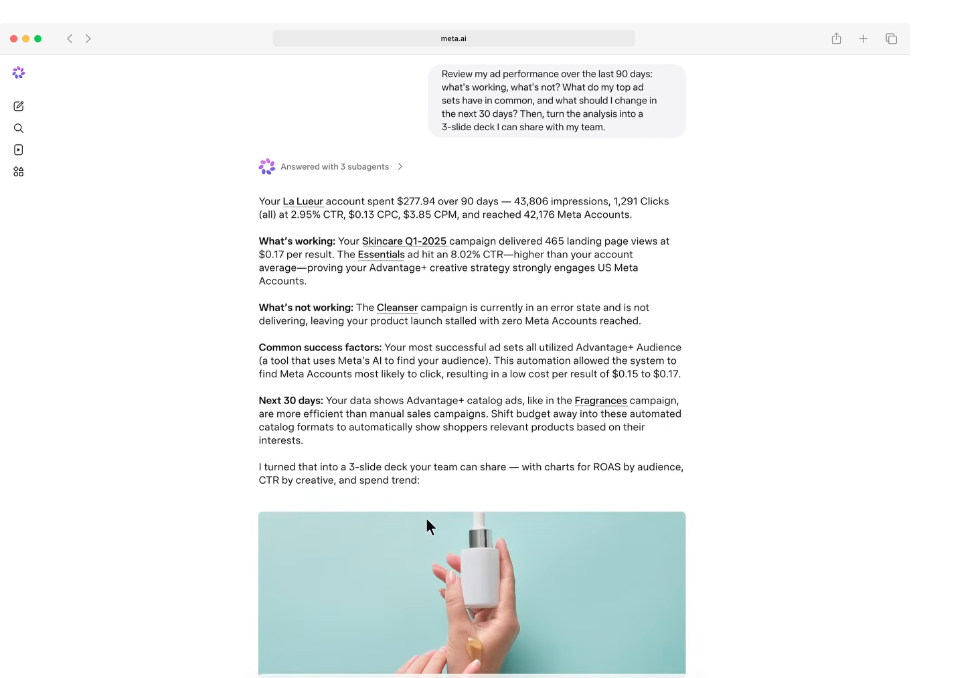
Meta AI Now Analyzes and Optimizes Your Ad Campaigns on Its Own
Meta has expanded its AI assistant for small businesses: Meta AI now analyzes ad performance, offers recommendations on budget and creative, and automatically builds reports.
Sony Investigation: WPP Ran Client Funds Like a "Global Criminal Enterprise"
New documents filed in a former GroupM executive's lawsuit show that Sony's internal investigation accused WPP of concealing advertising rebates from clients in China and other markets.

How Do You Measure Ads Shown to AI Agents? Nobody Has Solved It Yet
Publishers and advertisers are now trying to serve ads to AI agents instead of humans, but nobody has a clear answer for how to tell whether that advertising actually worked — and that gap is fueling a wave of new measurement startups.