Sony Investigation: WPP Ran Client Funds Like a "Global Criminal Enterprise"
New documents have surfaced in the lawsuit against WPP, the world's largest advertising holding company: according to one of them, one of the company's major clients — Sony — conducted its own investigation into WPP's practices and found that the company had withheld rebates owed to clients across several markets, including China. Sony described the practice as a "global criminal enterprise."
According to the lawsuit, Sony presented its findings to WPP in 2025. WPP's media investment arm, GroupM (now rebranded as WPP Media), used clients' pooled ad budgets to negotiate rebate deals with media owners, then kept a portion of those rebates for itself through a network of "intermediary brokers." According to one slide from a Sony presentation cited in the court filings, roughly $110 million was returned to clients in China in 2024, while $350 million remained with WPP "for future use."
These allegations are part of a lawsuit filed in November by Richard Foster, a longtime senior GroupM executive. He claims the company retaliated against him and fired him after he flagged a scheme misusing advertising budgets. By his estimate, GroupM improperly pocketed between $1.5 and $2 billion in profits from rebate deals over five years, and he is seeking at least $100 million in damages from WPP.
WPP called the lawsuit "meritless" and said it is preparing a new motion to dismiss. Sony declined to comment, citing the ongoing litigation. Meanwhile, WPP's China media unit has already faced serious legal scrutiny: Di Fei, GroupM China's former head of investment, was convicted of accepting $176 million in bribes and sentenced to life in prison (he is appealing the verdict).
The case has once again put a spotlight on an old, never fully resolved debate in advertising — the "principal media" model, in which an agency buys media in bulk on its own behalf and then resells it to clients at a discount. Agencies argue the model is often cheaper for clients, while critics say that even when fully disclosed, it can incentivize an agency to prioritize its own profit over the client's interests. According to consulting firm Madison and Wall, this model accounts for a "high single-digit to low double-digit" share of activity among major U.S. brands and agencies.
According to Foster's attorney, William A. Brewer III, the case comes down to a simple question: "Richard Foster asked the question every agency should be prepared to answer — does your profit come from faithfully serving your clients, or not?"
Related articles
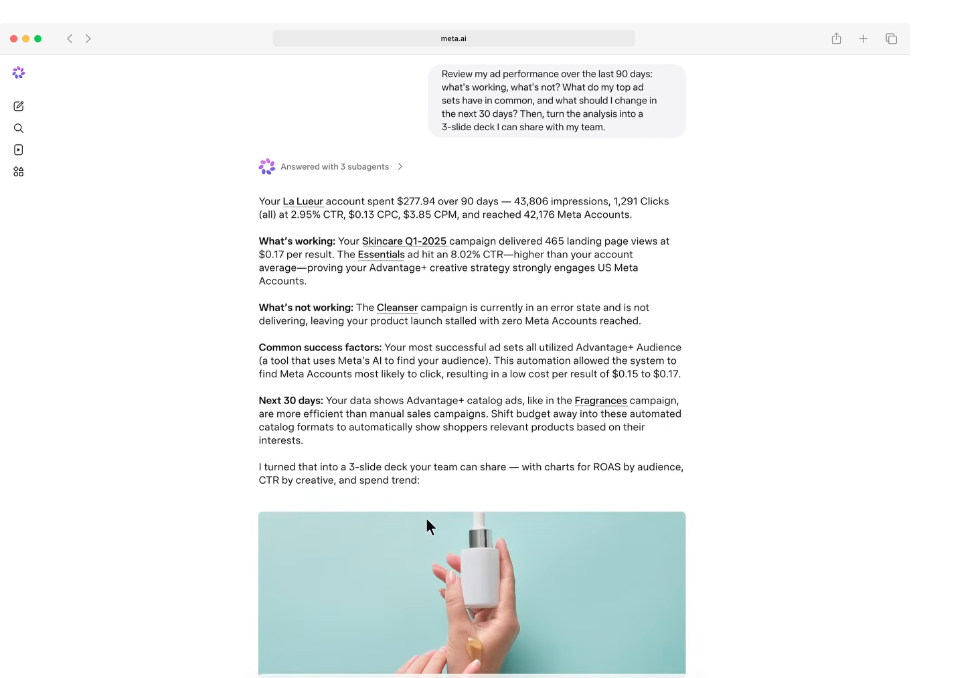
Meta AI Now Analyzes and Optimizes Your Ad Campaigns on Its Own
Meta has expanded its AI assistant for small businesses: Meta AI now analyzes ad performance, offers recommendations on budget and creative, and automatically builds reports.

How Do You Measure Ads Shown to AI Agents? Nobody Has Solved It Yet
Publishers and advertisers are now trying to serve ads to AI agents instead of humans, but nobody has a clear answer for how to tell whether that advertising actually worked — and that gap is fueling a wave of new measurement startups.

Omnicom Quietly Outsourced Hundreds of Staff Who Built Its AI Platform
Advertising holding company Omnicom has been touting its Omni artificial intelligence platform as the cornerstone of the company's future, but documents obtained by Adweek show it quietly handed off much of the team that built the platform to an outside contractor.