Ad Count vs. Ad Diversity on Meta

The rules of the game for advertising on Meta have changed. Marketers used to chase results through fine audience segmentation, lookalike audiences, and layered interest targeting. Those levers no longer carry the weight they once did — Meta's AI keeps getting better at finding the right audience on its own, so the bulk of optimization work is shifting from audience to creative, the one lever marketers can still control directly.
Many advertisers still confuse creative diversity with simply "running more ads." In reality, it means delivering the same message through fundamentally different approaches that Meta's algorithm can distinguish — allowing the system to learn which combination resonates most with which audience and when. Earlier this month, Meta added a new metric called "creative diversity" to Ads Manager reporting — the first tool to openly reveal how the platform assesses visual variety within a campaign. The metric is currently labeled "in development" and is scored across three levels: low, medium, and high.
Interestingly, many accounts that would seem to have high creative diversity — using static images, video ads, varied hooks and people-led videos, user-generated content (UGC), partnership ads, and carousels — are still scoring "low" on this new metric. That may suggest Meta's criteria haven't fully settled yet, or that the thresholds are stricter than expected, but the fact itself confirms that creative diversity is playing an increasingly central role in Meta's optimization strategy.
Diversity isn't measured by volume. Uploading 20 ads doesn't create diversity on its own — if all 20 rely on the same product image, the same opening frame, the same headline, and the same message, the algorithm sees them as little more than lightly edited copies of a single creative. Real diversity comes from varying the substantive elements that shape how people perceive an ad: the opening line, the creator or speaker, the visual style, the angle of the message, the offer, the customer pain point, and the emotional impact.
With video content, the first few seconds are decisive — they determine whether a viewer stops scrolling or keeps moving. That's why it's worth preparing several different hooks for the same video: for a skincare brand, for instance, a personal-experience hook like "I finally found a cream that doesn't leave my skin greasy" can run alongside an informational hook such as "three mistakes people make with their skincare routine" — the body of the video can stay the same, with only the opening line changing.
Creative fatigue is addressed the same way: when the same ad is shown to a person repeatedly, its performance drops and costs rise. With only a handful of similar creatives in Meta, the system leans on whichever one performs best and overexposes it, causing effectiveness to decline quickly. A genuinely diverse set of creatives, by contrast, gives the system more material to test, delays fatigue, and keeps the campaign from becoming overly dependent on a single "winning" ad.
Related articles
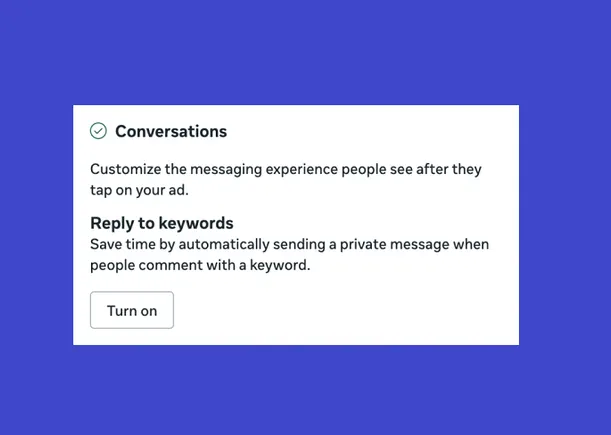
Meta Tests Feature That Automatically Sends a DM When Users Comment a Keyword on Instagram Ads
With the new "Reply to Keywords" feature, users who comment a preset keyword under an ad automatically receive a private message — reducing the need for manual replies.
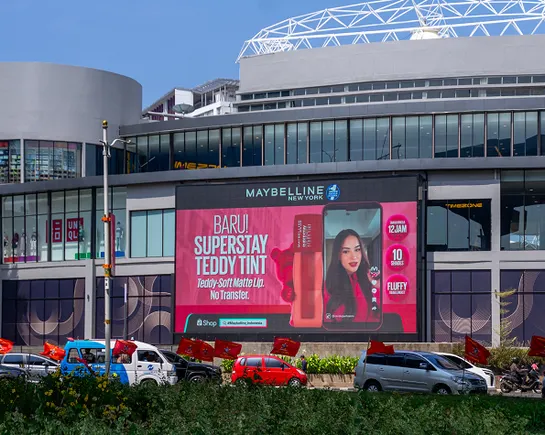
TikTok Extends Ad Placements Beyond the App to Billboards and Stores
TikTok's Out of Phone program is bringing brand content to billboards, in-store screens and cinemas through six new partners, giving marketers a way to put the TikTok format to work outside the app itself.
X Is Rolling Out a New Revenue Model for Creators — But Can It Win Them Over?
Starting in September, X is launching a new program to reward creators for original, high-quality content — though the platform's controversial reputation may complicate the effort.