While Everyone Negotiates With Google, Meta Reads the Internet for Free

According to bot-security firm DataDome, its network logged 17.7 billion AI agent requests in the second quarter of 2026 — a 45% jump from the first quarter. That growth isn't coming from Google or OpenAI, but from Meta: the Meta-ExternalAgent bot grew 74% quarter over quarter, and Meta-WebIndexer grew 163%, and together the two bots account for the majority of the AI agent traffic DataDome tracked — while sending publishers almost no visits in return. It's worth noting DataDome sells bot-protection services, so its numbers aren't disinterested — but the broader trend is unmistakable regardless: by robots.txt blocking data, GPTBot remains the most-blocked AI bot, even though it isn't the one reading the internet the most.
As the author notes, that gap traces back to Google's and Meta's historically different roles. For 20 years, the deal with Google was simple: Google crawls your site, Google sends you a visitor. When Google's AI Overviews started keeping those visitors inside its own results instead of sending them onward, publishers saw it as a "broken promise" — hence the pushback in the form of blocking, licensing deals and lawsuits.
Meta, by contrast, never promised to send users to your site — its model has always been built around keeping users inside its own platform. So when Meta's bots became the internet's most voracious reader, it didn't register as a "loss," because there had never been a promise to break in the first place. Meanwhile, the company that perfected the model of keeping users to itself has now become the biggest consumer of everyone else's work — and Google is now trying to copy that very model.
Meta pays only its very largest publishing partners: in March 2026, it signed a licensing deal with News Corp worth up to $50 million a year, covering Meta AI answers and model training, with similar deals in place with CNN, Fox News and USA Today. But only a few dozen of the biggest media brands get a seat at that table, while Meta's bots read everyone else just the same — small online shops, blogs and trade publications included.
The author's conclusion: there's no practical fix for small sites today, but it's worth tracking your log files to see which bots are actually reading your site. The only long-term solution is building direct relationships with your audience through channels platforms can't cut off.
Related articles
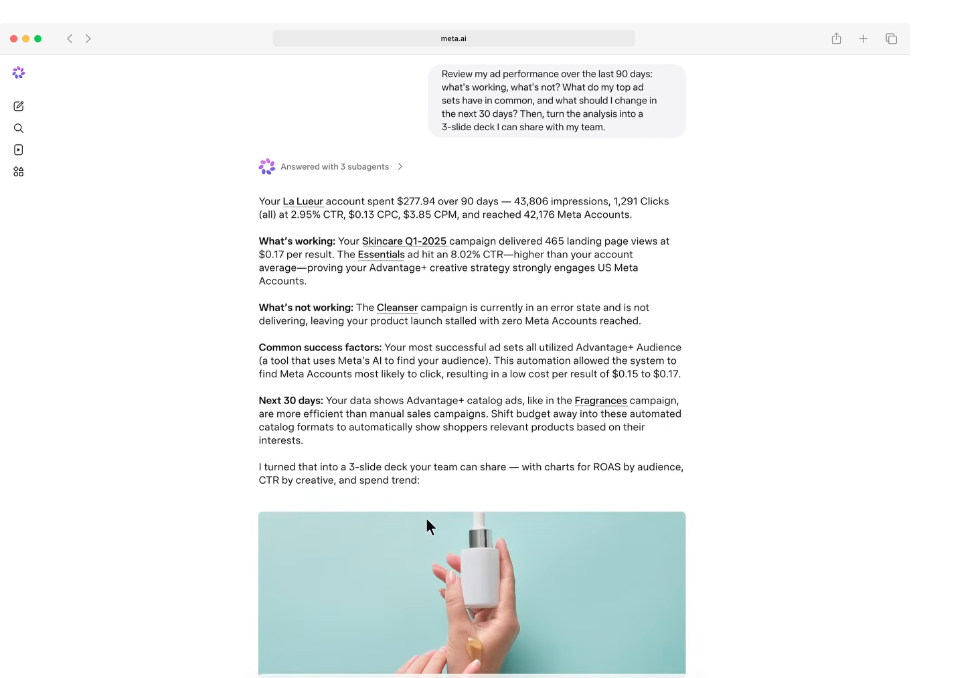
Meta AI Now Analyzes and Optimizes Your Ad Campaigns on Its Own
Meta has expanded its AI assistant for small businesses: Meta AI now analyzes ad performance, offers recommendations on budget and creative, and automatically builds reports.
Sony Investigation: WPP Ran Client Funds Like a "Global Criminal Enterprise"
New documents filed in a former GroupM executive's lawsuit show that Sony's internal investigation accused WPP of concealing advertising rebates from clients in China and other markets.

How Do You Measure Ads Shown to AI Agents? Nobody Has Solved It Yet
Publishers and advertisers are now trying to serve ads to AI agents instead of humans, but nobody has a clear answer for how to tell whether that advertising actually worked — and that gap is fueling a wave of new measurement startups.