Lowe's Cuts Annual Forecast as DIY Purchases Decline

Lowe's still can't shake off the pressure of a weak housing market and consumer uncertainty. CEO Marvin Ellison said Wednesday that DIY (do-it-yourself home improvement) spending remained under pressure in the second quarter, weighing on comparable sales. According to research firm GlobalData, the number of small projects rose 1.5% over the year, while large, big-ticket projects declined by more than 2%.
Lowe's total sales grew 8.3% year over year to nearly $26 billion. Comparable sales rose 0.2% — the fifth consecutive quarter of growth in that metric, driven largely by strong results in the Pro (professional customer) and home-services segments, as well as online sales growth of nearly 16%.
Profit metrics also improved slightly: operating income rose 2.3% to $3.5 billion, while net income was essentially flat at $2.4 billion.
Like rival Home Depot, Lowe's is leaning heavily into its Pro customer segment, which continues to post positive results. The company is investing in the area through a revamped Pro loyalty program and expanded digital tools, along with acquisitions such as Artisan Design Group and Foundation Building Materials.
"The push into Pro has the potential to create a significant advantage for Lowe's over the medium and long term, but the company can't afford to lose sight of its core consumer business in the process," said GlobalData managing director Neil Saunders. Meanwhile, leadership is betting that investments in loyalty, delivery capabilities and merchandise assortment will pay off once DIY demand rebounds. "We view this as cyclical. It's a temporary situation," Ellison told analysts on Wednesday's call.
Related articles
Hims & Hers CEO: Companies With Large Data Sets Could Cut AI Costs by 80%
Hims & Hers CEO Andrew Dudum is urging companies with large proprietary data sets to move from closed AI models to open-weight models.
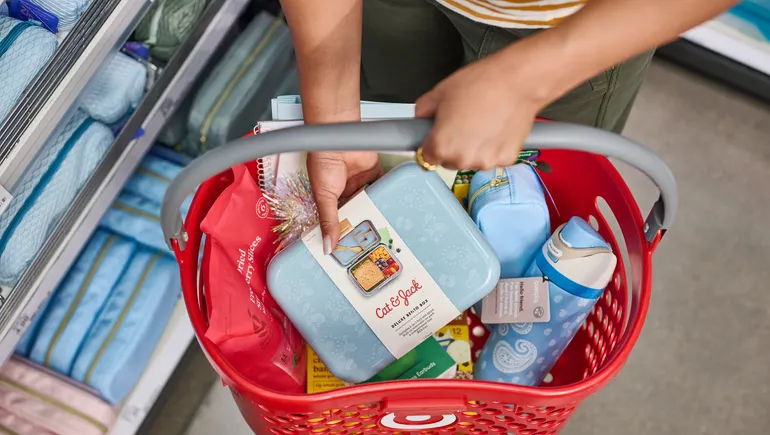
Back-to-School Shopping 2026: Growth Concentrated Among Higher-Income Families
A new Circana report finds the 2026 back-to-school shopping season will be average at best, with growth driven mainly by higher-income households.
Does the AI Boom Look Like Enron? An Expert Says: 'This Isn't a Collapse Yet'
Santa Clara University professor Ram Bala compares Big Tech's financial tactics to those of Enron, the energy company that collapsed in 2001 — but in his view, the resemblance doesn't mean the AI bubble is about to burst.