1 Million LinkedIn Users Hit the "AI Slop" Button: Platform Fights Back Against Artificial Intelligence
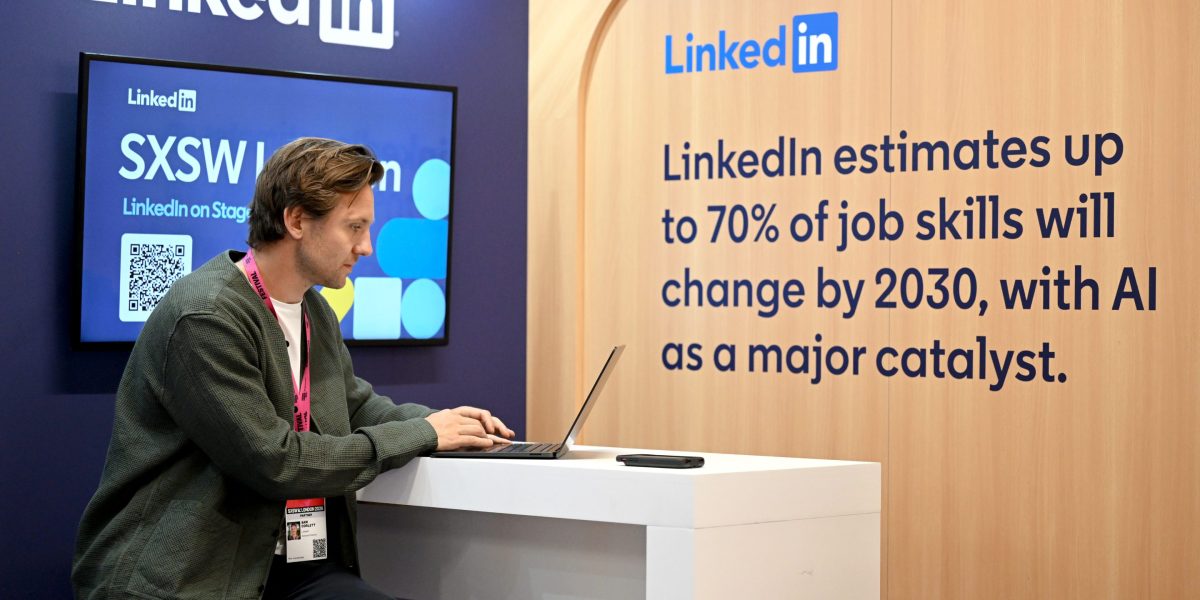
The professional social network LinkedIn is taking serious action against low-quality content generated by artificial intelligence (AI). Last month, the company's Chief Product Officer (CPO) Hari Srinivasan announced the rollout of a new feature on the platform — a "seems like AI slop" button that lets users flag posts that may have been generated by AI. Just two weeks after the feature launched, more than 1 million users had clicked the button, Srinivasan wrote last week.
According to Srinivasan, views of content the platform classified as AI slop dropped 40 percent compared to figures from previous weeks. "Despite the progress we've made, we know there's still a lot of work ahead to make sure LinkedIn remains a place where you can find real people and real perspectives," he said. "This issue remains a key focus."
The "dead internet theory" emerged in the late 2010s in tech circles as a fringe notion that the internet had lost the liveliness and authenticity of the blog-and-forum era. Now, as agentic AI and bots increasingly take over online spaces, the theory is gaining mainstream traction and edging closer to reality. Rudy Yang, an enterprise and retail fintech analyst at PitchBook, told Fortune: "There are a lot of gaps in the data, but a lot of the data points we do see point to the same thing — bot activity is increasing. It's agentic AI activity in particular that's driving a large share of the browser traffic we're seeing."
The cloud platform Cloudflare reported in April, for the first time, that AI-driven web traffic had surpassed traffic from human users; as of Tuesday, 61.9 percent of search queries came from bots, compared to 38.1 percent from humans. According to a Pew Research Center study released last week, 10 percent of a sample of 10,000 web pages collected in July 2026 showed clear signs of being AI-generated — up from just 2 percent five years earlier. More than a third of web pages published since ChatGPT's late-2022 release showed traces of AI involvement.
LinkedIn, with more than 1.3 billion registered users and widely used to find news and facts about employers, appears by some estimates to be suffering more from the AI content problem than other text-based social networks such as Medium, X, and Substack. AI-detection startup Pangram, in an analysis conducted in July, called LinkedIn "the most AI-saturated platform": more than 40 percent of its long-form posts were flagged as fully AI-generated, and nearly two-thirds of all the content the startup identified as AI-generated came from LinkedIn alone.
The tech companies that opened the door to AI are now having to fight the flood of content they themselves enabled. Spotify announced in July that it had removed 75 million spam and duplicate tracks out of roughly 100 million uploads to the platform over the past 12 months. Last month, Substack announced a partnership with Pangram and launched a detection feature that lets users assess how much of a post or comment was generated with AI. LinkedIn, for its part, plans to expand profile and page verification and to remove its "enhance your post" feature, which let users edit posts with AI, replacing it with a feature limited to spell-checking text, Srinivasan said.
For companies, the cost of failing to fight the flood of AI content can be steep. In March, the link-sharing service Digg shut down its app and laid off staff. Digg CEO Justin Mezzell said the app, which has since turned into an AI news aggregator, would not be shut down entirely, but that time was needed to deal with bot spam that had spiraled out of control. "When Digg's beta launched, we immediately saw posts from SEO spammers pointing out that Digg's link weight in Google still mattered," the company said in a blog post about the layoffs. "Within hours, we felt something we'd previously only heard about secondhand. Large parts of the internet are now made up of sophisticated AI agents and automated accounts. We knew bots were part of the landscape, but we didn't fully grasp their scale, sophistication, and the speed at which they'd find us."
Related articles
The Difference Between Using AI and Being AI-Native
Using artificial intelligence tools doesn't automatically make your company AI-native — the real difference isn't about technology at all, but about how work is designed, who it's assigned to, and how it's measured.

Boosting Team Productivity with an AI Social Media Assistant
How an AI social media assistant helps social teams automate repetitive tasks, track trends, and make strategic decisions — based on Sprout Social's experience.
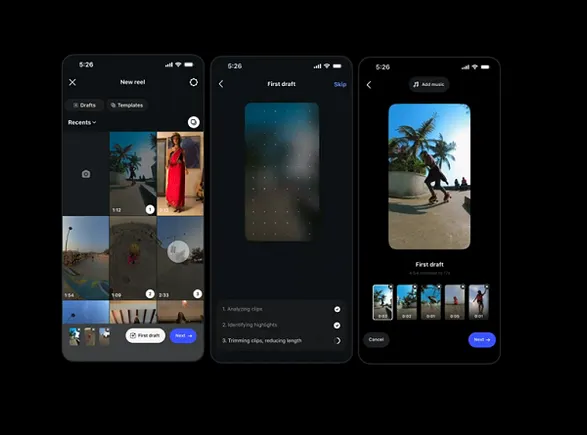
Instagram Launches First Draft Feature for Reels
Instagram has rolled out a new First Draft feature that automatically picks the best moments from multiple video clips, giving users a ready-made starting point for building Reels.