IAB Updates AI Advertising Disclosure Rules as Regulations Multiply

The Interactive Advertising Bureau (IAB) has released the second version of its flagship document on when and how to disclose the use of artificial intelligence in advertising. The updated guidance aims to set a common standard for the industry.
The revised recommendations call for balancing transparency with business goals, warning that overusing AI labels could cause "label fatigue" and undermine their long-term effectiveness. The first version came out in January, and since then, the EU, parts of Asia, New York, and California have all enacted laws or rules requiring disclosure of AI-generated content.
Under the new framework, US advertisers can use a standardized "sparkle" icon or a text label, though a single icon for the EU has yet to be agreed upon. According to IAB and Sonata data, 83% of ad industry leaders admit to using AI in the creative process — up 23 percentage points from 2024. In a survey by AdvertiserPerceptions, 72% of marketers said disclosing AI use should become an industry standard.
There's a curious contradiction, too: data cited in the document shows 73% of Millennial and Gen Z consumers say AI-generated advertising doesn't affect their likelihood to purchase — or even increases it — while other research has found AI-generated ads can hurt click-through rate (CTR). That very contradiction is why IAB landed on a "not every case needs a label" position.
Under the updated guidance, disclosure is required mainly in consumer-facing situations — synthetically generated images or video, digital replicas of living or deceased people, synthetic voices in certain contexts, and conversational agents used in advertising. Routine edits such as color correction, or "clearly stylized or fantastical imagery," don't require disclosure.
IAB's VP of artificial intelligence, Carolyn Giegerich, explains the position: "Trust between a brand and its customer is everything, and being honest about AI is part of earning that trust. But a label isn't needed in every case — labeling everything could train consumers to tune labels out and hurt advertisers. That's why we took a very nuanced position in this document."
Related articles
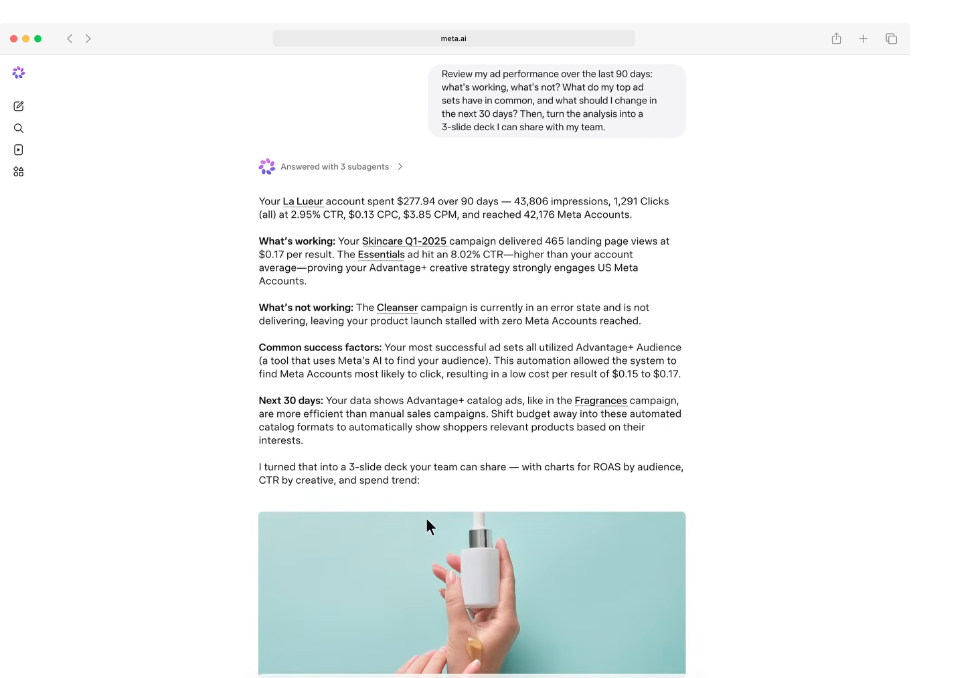
Meta AI Now Analyzes and Optimizes Your Ad Campaigns on Its Own
Meta has expanded its AI assistant for small businesses: Meta AI now analyzes ad performance, offers recommendations on budget and creative, and automatically builds reports.
Sony Investigation: WPP Ran Client Funds Like a "Global Criminal Enterprise"
New documents filed in a former GroupM executive's lawsuit show that Sony's internal investigation accused WPP of concealing advertising rebates from clients in China and other markets.

How Do You Measure Ads Shown to AI Agents? Nobody Has Solved It Yet
Publishers and advertisers are now trying to serve ads to AI agents instead of humans, but nobody has a clear answer for how to tell whether that advertising actually worked — and that gap is fueling a wave of new measurement startups.