Google: Some Industries Don't Need GEO Either — Just Regular SEO

Google's John Mueller responded to a question about whether there are industries for which GEO (Generative Engine Optimization) doesn't matter. His answer made clear how the company views this issue.
A Bluesky user going by @galloni.net asked him: "@johnmu.com, are there any niches where GEO still doesn't matter at all yet? I'm thinking of areas like adult content and gambling, where Google remains the primary source."
Mueller replied: "I'm not quite sure what you're asking; from our perspective, there's nothing special you need to do for generative AI answers." In other words, in his view this rule applies equally to all industries — no separate strategy is required for GEO.
Explaining the reason, he noted that Google's AI search results are formed directly from the company's indexed database. The system selects the top results for a query, as well as results from so-called "query fan-out" — related and additional queries the user might be interested in. Because Google draws its AI search answers directly from the regular search index, companies and publishers don't need to do anything beyond standard SEO to rank there.
Lately, businesses have been demanding solutions for ranking high in AI search, and wherever there's a client ready to pay, someone will always be found to offer that service. This has given rise to consultants specializing in AI search optimization, and even experienced SEO professionals have started offering such services out of necessity — even while admitting it's essentially plain SEO. Many SEO plugins now let you generate an LLMs.txt file — a markdown-format file tailored for LLMs (Large Language Models) that points them to content — yet no search engine or AI chatbot actually uses this file. Even so, the rule that the customer is always right keeps holding true.
Thus, according to Google's official position, GEO does not exist as an independent, standalone discipline — it is the natural result of solid, consistent SEO practice. The key takeaway for companies is this: instead of searching for some new "secret" formula for visibility in AI search, it's enough to focus on improving the quality of existing search optimization.
Related articles

The Difference Between Using AI and Being AI-Native
Using artificial intelligence tools doesn't automatically make your company AI-native — the real difference isn't about technology at all, but about how work is designed, who it's assigned to, and how it's measured.

Boosting Team Productivity with an AI Social Media Assistant
How an AI social media assistant helps social teams automate repetitive tasks, track trends, and make strategic decisions — based on Sprout Social's experience.
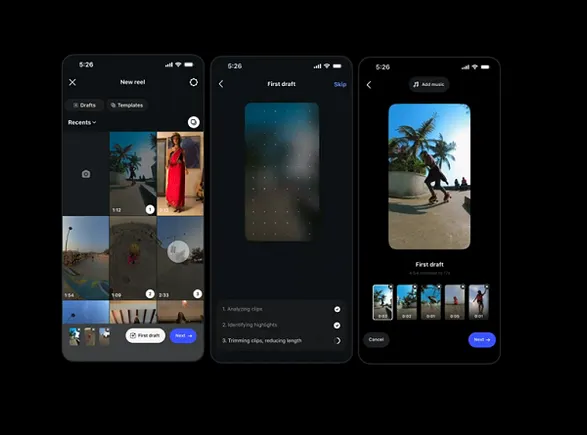
Instagram Launches First Draft Feature for Reels
Instagram has rolled out a new First Draft feature that automatically picks the best moments from multiple video clips, giving users a ready-made starting point for building Reels.