The "Hidden" Google Ads Bug: How Value Inflation Eats Your Budget
Smart Bidding in Google Ads — the system that uses artificial intelligence to manage bids automatically — optimizes for whatever value data it's fed. The problem, according to Search Engine Journal editor Sarah Stemen, is that in many ad accounts this value data — meaning conversion metrics, such as purchases or form submissions — turns out to be wrong.
On the surface, nothing seems wrong with the account: campaigns are running, keywords match user intent, and the reports look solid. But underneath, there can be a corrupted value signal quietly feeding Smart Bidding bad data. When a marketer notices the discrepancy, the first instinct is usually to blame the ad platform for "over-counting" — when in reality, it's not the platform itself that's at fault, but the faulty instructions it was given.
If an account runs on tCPA or tROAS — target cost per acquisition or target return on ad spend, the metrics Smart Bidding uses to manage bids automatically — on autopilot, without anyone auditing the conversion calculations, the system ends up optimizing for a fictitious value instead of actual revenue. Over time, the account becomes "inflated": a wide gap opens up between the results ads appear to deliver and the business's real day-to-day numbers. Experts call this "value inflation" — meaning the dollar figure Smart Bidding is chasing no longer reflects the revenue the company is actually earning.
Importantly, this isn't fraud or deception on the platform's part — it's almost always a self-inflicted tracking issue. And the stakes are higher today than they were five years ago, because Smart Bidding doesn't check its own homework: tCPA and tROAS simply take whatever value they're given as fact. If those numbers are inflated, the algorithm chases even more fake conversions, driving up bids to win auctions and producing even more inflated results — all while the account appears, from the outside, to be performing beautifully.
According to the author, value inflation is rarely the result of one big, obvious mistake — it usually stems from three or four small distortions stacking on top of each other. Each one may look trivial on its own, like a minor rounding error, but together they can inflate an account's true value by 20 to 40 percent without triggering a single warning sign.
Related articles
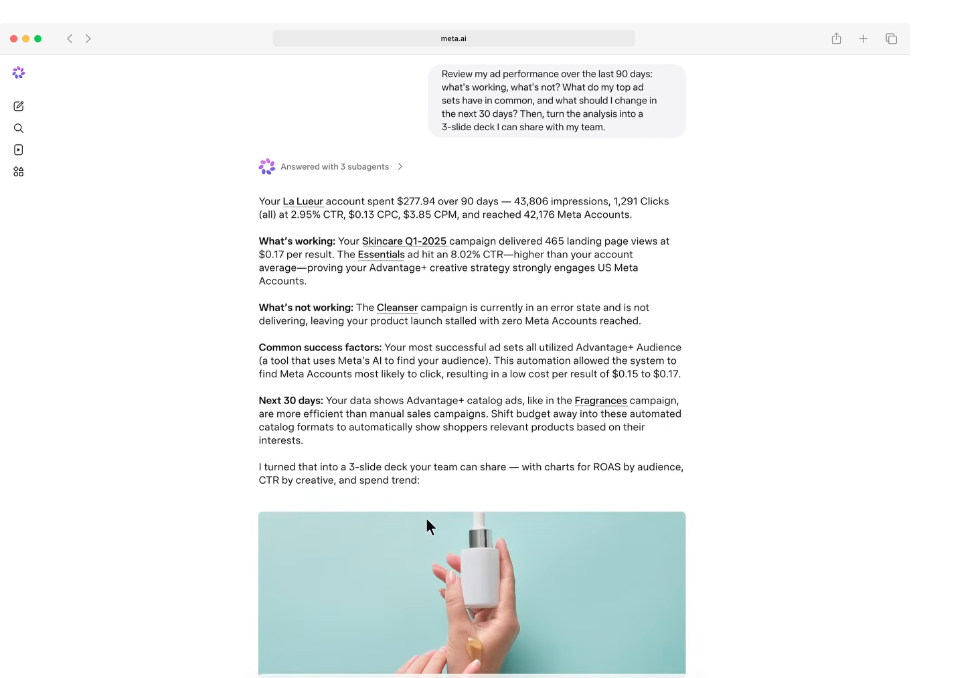
Meta AI Now Analyzes and Optimizes Your Ad Campaigns on Its Own
Meta has expanded its AI assistant for small businesses: Meta AI now analyzes ad performance, offers recommendations on budget and creative, and automatically builds reports.
Sony Investigation: WPP Ran Client Funds Like a "Global Criminal Enterprise"
New documents filed in a former GroupM executive's lawsuit show that Sony's internal investigation accused WPP of concealing advertising rebates from clients in China and other markets.

How Do You Measure Ads Shown to AI Agents? Nobody Has Solved It Yet
Publishers and advertisers are now trying to serve ads to AI agents instead of humans, but nobody has a clear answer for how to tell whether that advertising actually worked — and that gap is fueling a wave of new measurement startups.