Users Are Cancelling Claude Subscriptions Over Anthropic's New 'Watermark'
AI company Anthropic's decision to add a watermark (an invisible digital marker embedded in text that flags it as AI-generated) to Claude's chatbot output has alienated some of its users. This week, the company announced that certain Claude versions now embed an "imperceptible watermark" directly into text output — one that survives even when the text is copied elsewhere and can persist through some edits. Although Anthropic says this doesn't affect the text's meaning, quality, or readability, dozens of users have posted on X since Monday saying they cancelled their Claude subscriptions specifically over this.
Business Insider spoke with four users, all of whom confirmed they cancelled. Arturo Villarroya, who works in public policy, cancelled his Claude Max subscription, which starts at $100 a month. He said he mainly used Claude for coding and research tasks, but worried the marker could be applied even to text used only for translation, spell-checking, or light editing — a concern in academic and professional settings with strict AI policies.
Czech freelance developer Vladislav Rajtmajer cancelled for the same reason: he uses AI for code review and translation, and worries that an "AI mark" on code delivered to clients could raise questions about authorship or contract terms. Georgia-based AI consultant Richard Echols noted with regret that the mark gets applied even when he uses Claude only to edit text he wrote himself. Anthropic explained in its blog that the watermark only indicates Claude "processed" the text, not necessarily that a human isn't the author — but that clarification hasn't eased many users' concerns.
In a statement to Business Insider, Anthropic said it hasn't seen a notable rise in cancellations; as of September 2025 the company had more than 300,000 business customers, and that number is presumed to have grown significantly since. The company also said it introduced the watermark to comply with the EU's AI Act, and plans to soon offer third-party developers a free API for checking text.
Anthropic isn't alone here: Google uses its own SynthID technology, and OpenAI applies a similar technology to supported image and audio content. Some experts, including The Narrative Company co-founder Aadit Sheth, view watermarks as a necessary transparency tool, especially given the growing volume of AI-generated content online. But in practice, the presence of "invisible control marks" in work delivered to clients is eroding trust among some professional users.
Related articles
Waiting on Unpaid Clients Is a Mistake: A Hidden Source of Lost Revenue
According to the American Collectors Association, roughly 13% of business accounts are past due at any given time — and every month of delay lowers the odds of recovery while raising cash-flow risk.

Amazon, Uber, DoorDash and Walmart take the delivery wars to the skies
In Texas, a package a woman was expecting from an Amazon drone landed straight in her swimming pool — a mishap that arrived just as drone delivery, after decades of promises, is finally reaching serious scale.
Hundreds of AI Productivity Tools Were Born in the Last 12 Months — Most Won't Survive
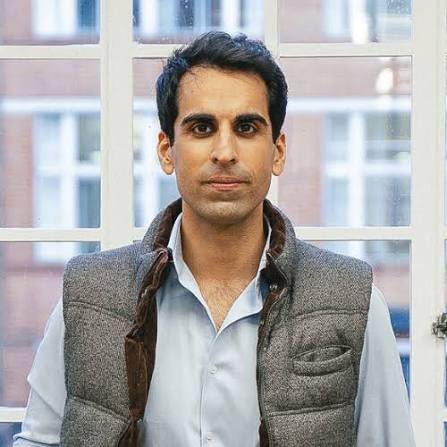
Sanjot Malhi, managing partner at venture fund Northzone: the world doesn't need another AI productivity tool — the market is already oversaturated, and it's time for investors to look for solutions that create genuine value.