Amazon, Uber, DoorDash and Walmart take the delivery wars to the skies
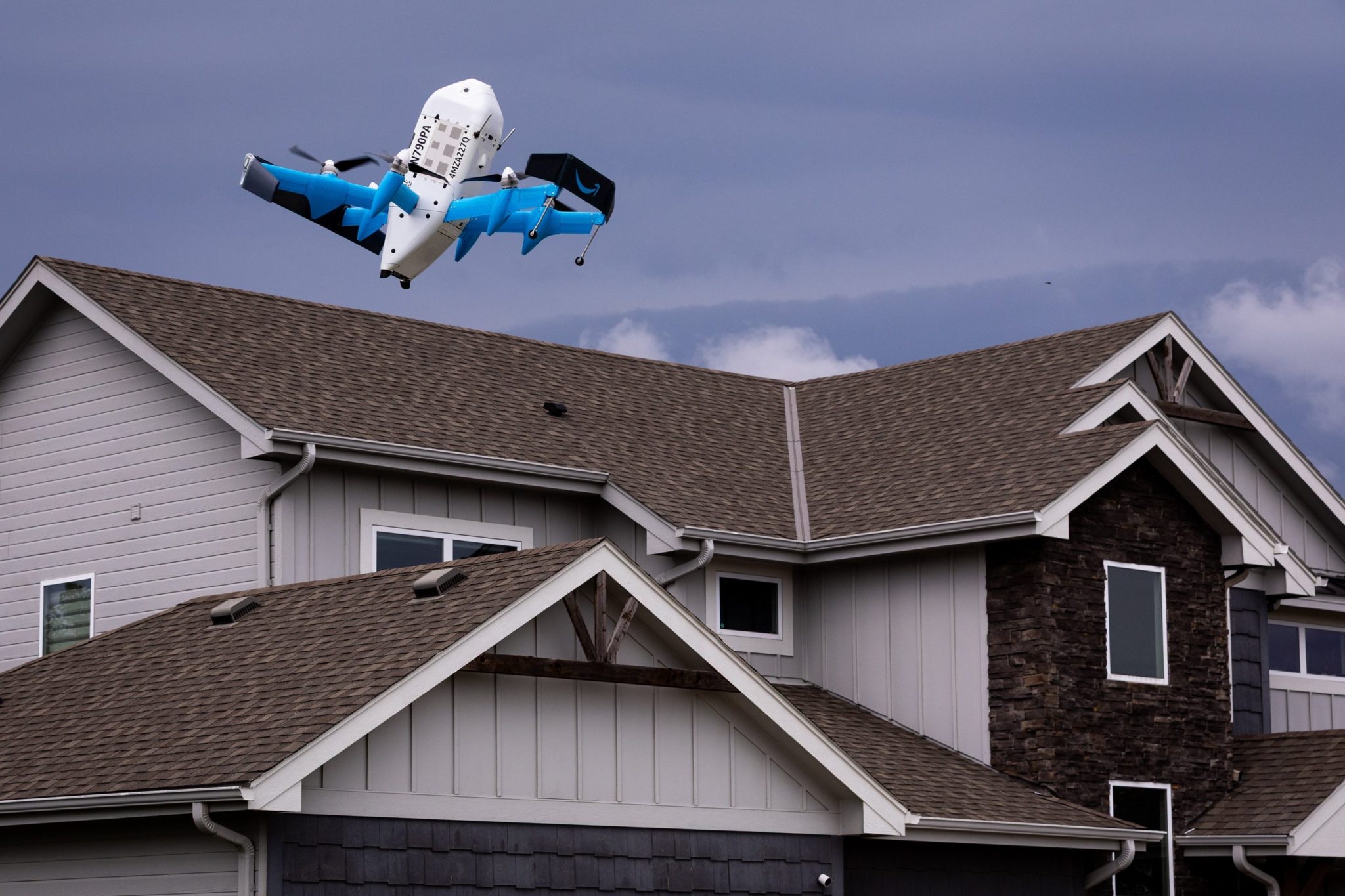
Lindsey Austen, a resident of Richmond, Texas, was waiting on Monday for a delivery from an Amazon drone. Hearing the drone approach her house, she rushed outside in time to film it — only to watch the package drop straight into her backyard pool. "I don't want drone delivery after this," she told Storyful. The minor mishap came at the very moment drone delivery, after decades of unfulfilled promises, is finally beginning to scale in earnest.
On Wednesday, Amazon announced it would expand its Prime Air service to nearly 500 cities and counties across the US by the end of 2026 — six times its current footprint. The company currently flies deliveries from 11 sites and plans to add new markets including Chicago, Atlanta, Cleveland and Syracuse, New York. Its drones can deliver packages weighing up to 2.3 kilograms in as little as 30 minutes.
DoorDash, after securing certification from the Federal Aviation Administration (FAA), launched DoorDash Air, operating as an independent commercial drone carrier. The company frames the service not as a replacement for its main delivery method but as an addition to its existing network — human couriers still handle the vast majority of its millions of daily orders.
Uber took a different route, forgoing its own drone in favor of a strategic partnership with Zipline, a company valued at $7.6 billion. The tie-up, set to launch through Uber Eats later this year, aims to reach 1 million drone deliveries a day by 2029. Zipline says the number of businesses using its service jumped 13-fold in the first half of 2026, and it now completes a delivery somewhere in the world every 20 seconds.
Walmart, partnering with Alphabet-owned Wing, is closing in on 2 million drone deliveries — double the 1 million milestone it announced in May. By 2027, the company plans to build a network of more than 270 drone delivery hubs serving over 40 million Americans.
The industry still faces plenty of hurdles: federal and local permitting, drones' limited payload capacity and flight range, and concerns over noise, privacy and safety. But the numbers the companies are putting behind it — Amazon's nearly 500 cities, Walmart and Wing's 40 million residents, Uber and Zipline's goal of 1 million deliveries a day — are making it harder to dismiss the technology as just an experiment.
Related articles
Waiting on Unpaid Clients Is a Mistake: A Hidden Source of Lost Revenue
According to the American Collectors Association, roughly 13% of business accounts are past due at any given time — and every month of delay lowers the odds of recovery while raising cash-flow risk.

Hundreds of AI Productivity Tools Were Born in the Last 12 Months — Most Won't Survive
Sanjot Malhi, managing partner at venture fund Northzone: the world doesn't need another AI productivity tool — the market is already oversaturated, and it's time for investors to look for solutions that create genuine value.
Hundreds of AI Productivity Tools Were Born in the Last 12 Months — Most Won't Survive
Sanjot Malhi, head of growth at venture fund Northzone, is blunt: the world doesn't need another AI productivity tool — the market is already oversaturated, and investors now need to look for solutions that create genuine value.