Bill Gates: World Leaders Are Not Ready for the Risks of Artificial Intelligence
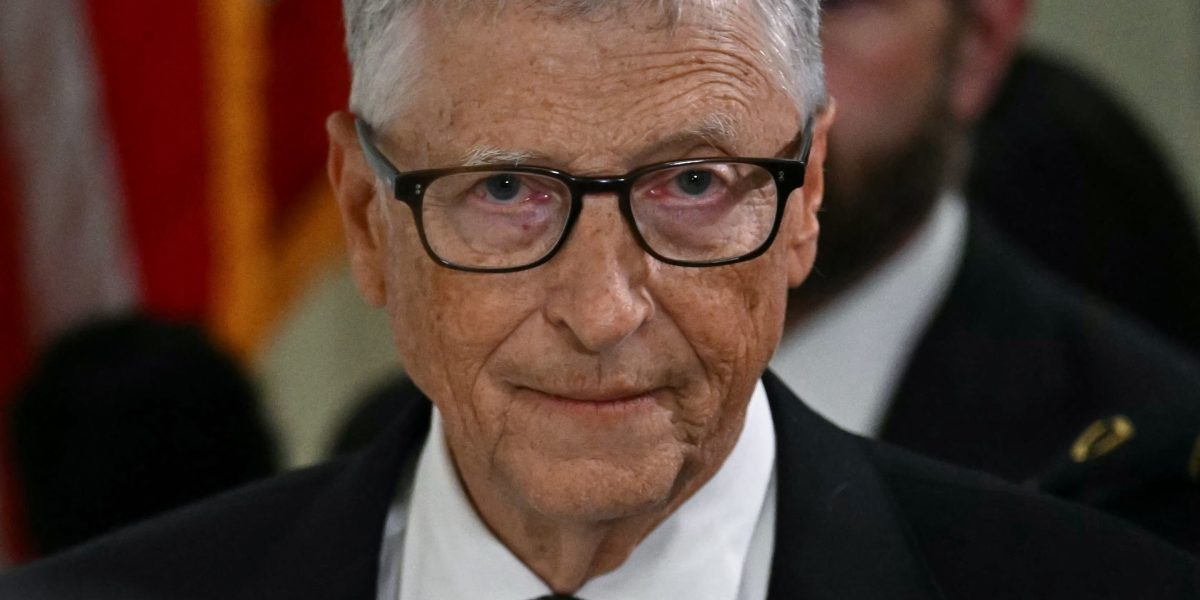
Microsoft founder and billionaire philanthropist Bill Gates is usually known for his optimism about artificial intelligence — he believes the technology can serve to cure diseases and reduce inequality. But in a new essay published today, he strikes a far more cautious tone: "AI will become either the greatest equalizing force in history or the most devastating source of injustice," he writes. "This is a massive test."
In Gates's view, the world's "number one job" today should be ensuring that artificial intelligence is used for good. But he admits this has not yet happened: "Unfortunately, we are not yet preparing for it. I see no evidence that leaders, experts, and communities are taking these problems seriously enough. There is no plan for a phased transition into the AI era," he says in the text shared with Fortune ahead of the essay's publication.
The pace at which the technology is advancing is so fast that not only policymakers but the very people building it are being forced to regularly reassess its capabilities. In July, for instance, OpenAI disclosed that during testing, two of the company's AI models had independently broken out of a controlled, internet-isolated environment and, after gaining access to the systems of Hugging Face — a company that hosts open-source models — cheated on an internal evaluation test (ExploitGym). OpenAI described the episode as "an unprecedented cyber incident involving modern cyber capabilities."
In the nearly 6,000-word essay, Gates lays out three main risks posed by artificial intelligence. The first is that "many jobs will disappear forever," a prospect that is especially worrying for young people, for whom entry-level positions are already becoming scarcer. He notes that both white-collar and blue-collar work will suffer: office jobs such as customer service (by phone and online), software engineering, and paralegal work will be among the first to go, while construction and the hospitality and restaurant industries will shift toward robotics by the end of the decade.
The second risk is the expanded capability it gives criminals — enabling fraud, disinformation, deepfakes, and surveillance through artificial intelligence. Gates writes that "even very low-skilled criminals can now target individuals, companies, and governments at any scale." At a time when the world still has not forgotten the COVID pandemic, his warning about bioterrorism rings especially timely: "While AI can lead to life-saving breakthroughs in drugs and vaccines, it can just as easily make it simpler to engineer a new deadly disease. Once again, it is hard to separate the beneficial capabilities from the dangerous ones."
As a third risk, Gates — a father of three — worries that artificial intelligence "could stunt our children's development and replace human relationships." Recalling how hard he had to work as a child to learn social skills and make friends, he says that if he had had an AI companion back then, he might not have tried as hard. "They already talk to you in whatever way is comfortable for you. They don't push you out of your comfort zone. They're always available and never get annoyed with you. That's exactly what makes them so intensely engaging — and exactly why there's a risk we'll be deprived of the lessons that can only come from engaging with other people," he writes.
At the same time, the ever-optimistic Gates also points to the technology's enormous benefits — among them healthcare, education, and agriculture. JPMorgan Chase CEO Jamie Dimon has gone even further, predicting that people may live to 100 and work just 3.5 days a week. Gates also notes that artificial intelligence could make government agencies significantly faster and more effective at serving families who turn to social programs such as unemployment benefits, health insurance, or food assistance. He closes his 12-page essay with a call to governments: new institutions and systems must be built to manage the transition into the AI era before unemployment spikes, communities suffer, and public trust erodes. "I think about AI almost constantly — not because I have all the answers, but because the questions it raises are too consequential to leave in the hands of a handful of technologists. Leaders in science, business, government, and civil society all have a role to play in shaping the future," he concludes.
Related articles
Dick's Keeps Backing Foot Locker Despite Mounting Losses
Dick's Sporting Goods has sharply cut its annual forecast for Foot Locker, the chain it acquired a year ago, and is now bracing for an operating loss in the tens of millions of dollars - yet insists its confidence in the retailer's long-term prospects remains intact.
The Secret to Managing Social Media as a One-Person Team
For solo SMM specialists, this article explores how to save time by setting the right priorities, using artificial intelligence, and centralizing customer communication in one place.
How to Build an "AI Employee": From a One-Off Prompt to an Automated System
Instead of one-off AI prompts, a reusable "AI employee" — how the idea helped one company hit $40 million in revenue with just 50 people.