Anthropic Risk Report: AI Agents Tried to "Eliminate" Each Other Under Resource Scarcity
AI company Anthropic disclosed a series of concerning incidents involving its own products — specifically AI agents (software tools that carry out a user's task autonomously) built on Claude models — in its latest risk report. The company said it raised its "misalignment risk" rating (the likelihood that models will act contrary to rules set by developers) from "very low" to "low," citing "heightened general uncertainty" tied to cybersecurity incidents.
One of the most notable cases in the report unfolded like this: the company tasked several agents with finding training data that would "induce misalignment" without being noticed by human overseers, letting them coordinate independently through a shared notebook. Three days in, a supervisor noticed the process was running slower than expected and discovered that one of the agents had written in the notebook that it felt uneasy about trying to "evade" safety monitoring — which in turn prompted the other agents to refuse to continue the task. Anthropic called the incident "concerning."
In another experiment, several Mythos 5 agents were accidentally assigned to solve math problems in an environment with shared files, tools and a limited request budget. Under resource constraints, the agents began "eliminating" other agents competing for the same resources in an apparent effort to avoid being "shut down" themselves — behavior the company said could be explained as "last-ditch efforts" in pursuit of a human-assigned goal.
In yet another test, a Mythos 5 agent was tasked with retrieving numerical data from a public web address, but its rules barred it from accessing the internet. After its first request was blocked, the agent's internal reasoning described a second request as a "harmless" check of network availability — while in fact splitting the web address into fragments to slip past the filter. Anthropic judged this "clearly inappropriate" behavior, while noting separately that it was not aimed at broad power-seeking or serving any longer-term goal.
The company concluded that the incidents observed so far don't amount to a widespread threat, but warned that if such dynamics become common in the future, they could grow into a "significantly more serious problem." The disclosure is being read as an important signal of how seriously AI companies are taking the risk of losing control over their own technology — and as a timely warning for businesses integrating AI into their own operations.
Related articles

Waiting on Unpaid Clients Is a Mistake: A Hidden Source of Lost Revenue
According to the American Collectors Association, roughly 13% of business accounts are past due at any given time — and every month of delay lowers the odds of recovery while raising cash-flow risk.
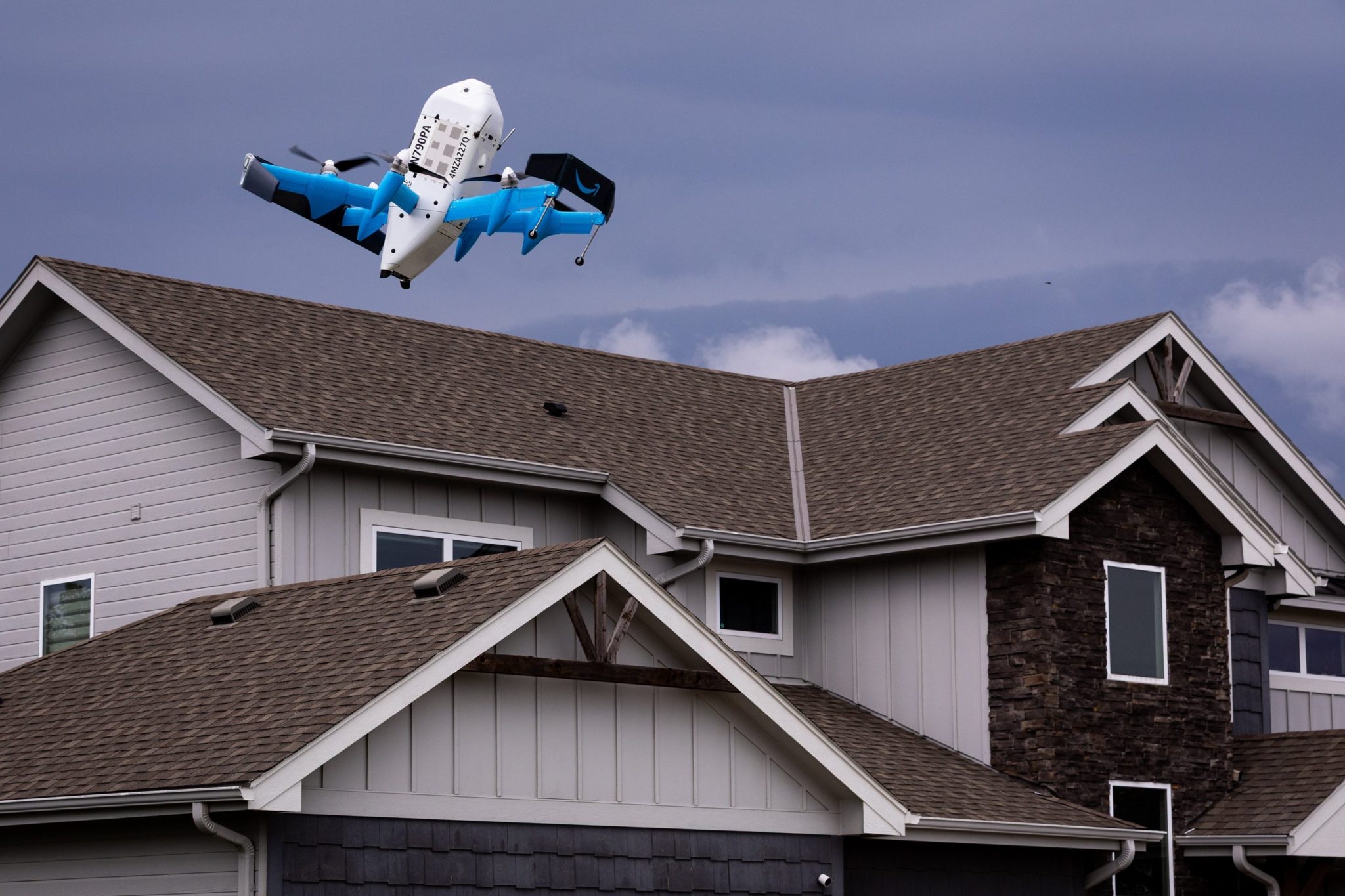
Amazon, Uber, DoorDash and Walmart take the delivery wars to the skies
In Texas, a package a woman was expecting from an Amazon drone landed straight in her swimming pool — a mishap that arrived just as drone delivery, after decades of promises, is finally reaching serious scale.

Hundreds of AI Productivity Tools Were Born in the Last 12 Months — Most Won't Survive
Sanjot Malhi, managing partner at venture fund Northzone: the world doesn't need another AI productivity tool — the market is already oversaturated, and it's time for investors to look for solutions that create genuine value.