Hundreds of AI Productivity Tools Were Born in the Last 12 Months — Most Won't Survive

Sanjot Malhi, head of growth and partner at venture capital fund Northzone, doesn't mince words: the world doesn't need another AI productivity tool. Over the past 12 months, his team has evaluated hundreds of such products, and in his view, most of them are destined to fall out of the market in the near future.
In 2023–2024, AI productivity tools multiplied at an explosive rate: developers discovered "vibe coding" through Lovable, lawyers started using Harvey, doctors cut down on paperwork with Abridge, and everyday office workers became more efficient with note-taking assistants like Granola. All of these tools delivered on their promise — they searched, summarized, automated, and saved time. But Malhi points out that today the number of such horizontal and vertical tools runs into the hundreds, if not thousands — and that figure alone signals a badly oversaturated market.
According to Northzone's analysis, AI applications currently generate around $150–200 billion in annual recurring revenue (ARR), with the largest and most mature segment — AI-assisted coding — accounting for 20–30% of that total. That category started as a simple assistant tool (GitHub Copilot), then evolved into systems capable of acting independently — Cursor, Claude Code, Codex — and now platforms like Blitzy and Factory are growing into fully autonomous labor systems capable of working for weeks without human intervention.
Malhi likens this to Warren Buffett's well-known theory of the "economic moat" — a durable competitive advantage that shields a business from rivals. But today, especially among AI-native companies, that kind of protection is weaker than it has ever been. Since ChatGPT launched in November 2022, roughly $1 trillion in net new revenue has flowed into the AI ecosystem — an unprecedented pace. Yet how durable that revenue actually is has never been more uncertain, because open-source models, new chipmakers, and even the AI models themselves can displace existing applications at any moment.
Northzone predicts the next 12 months will be a period defined by innovation rather than efficiency: discovering new drugs and materials with the help of artificial intelligence, making the world safer through autonomous AI systems in defense, and physical AI (robotics) potentially becoming an even bigger market than digital AI.
Northzone didn't arrive at this position by accident — the fund spent nearly two years studying what a genuinely autonomous labor system should look like, and held its ground for over a year even as productivity tools were raising huge sums. Since early 2026, the fund has been leading investment rounds worth hundreds of millions of dollars, as the convergence of foundational intelligence, deep reasoning, and self-learning cycles has given rise to systems capable of operating independently over extended periods.
Related articles
Waiting on Unpaid Clients Is a Mistake: A Hidden Source of Lost Revenue
According to the American Collectors Association, roughly 13% of business accounts are past due at any given time — and every month of delay lowers the odds of recovery while raising cash-flow risk.
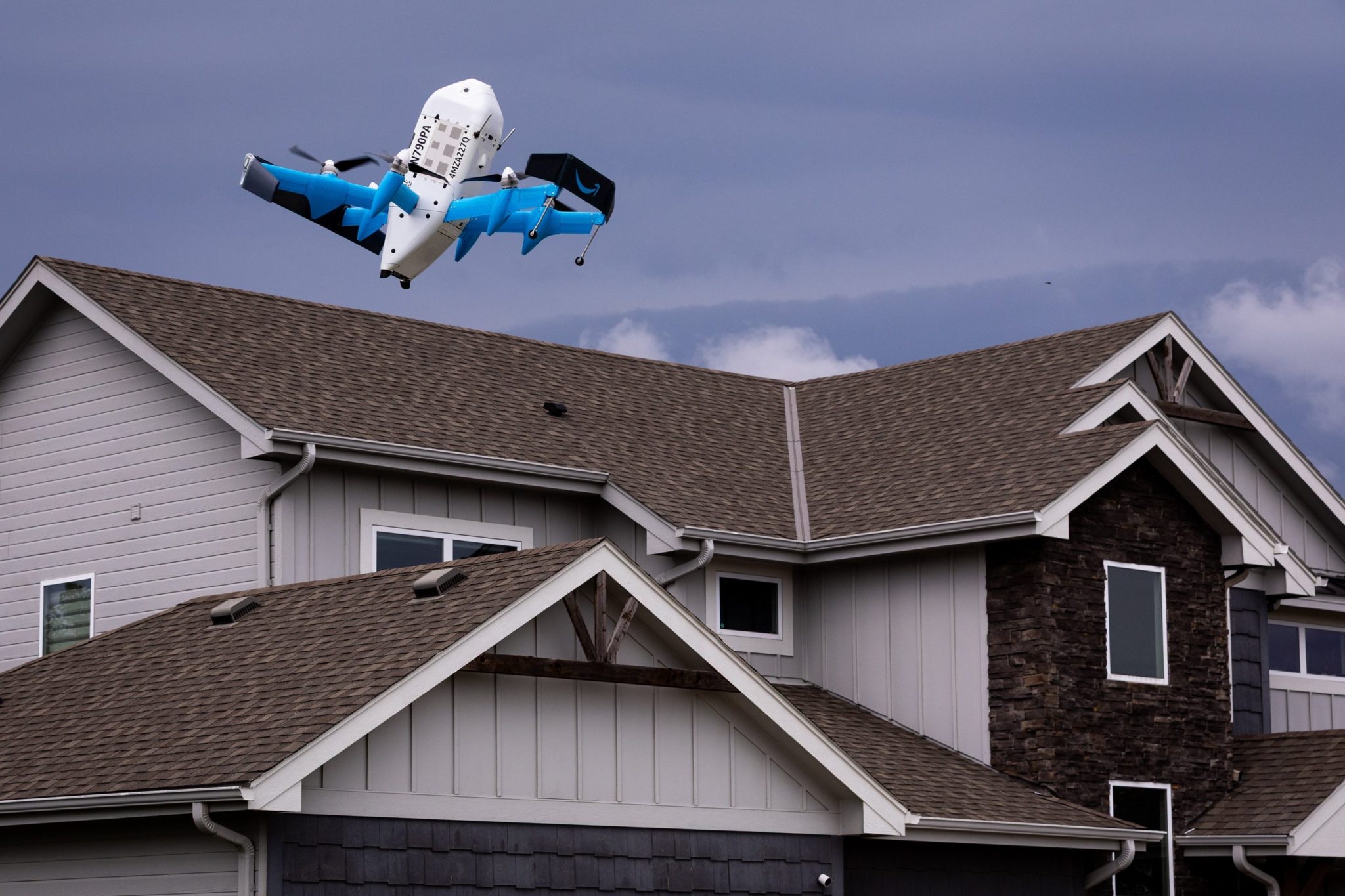
Amazon, Uber, DoorDash and Walmart take the delivery wars to the skies
In Texas, a package a woman was expecting from an Amazon drone landed straight in her swimming pool — a mishap that arrived just as drone delivery, after decades of promises, is finally reaching serious scale.
Hundreds of AI Productivity Tools Were Born in the Last 12 Months — Most Won't Survive
Sanjot Malhi, managing partner at venture fund Northzone: the world doesn't need another AI productivity tool — the market is already oversaturated, and it's time for investors to look for solutions that create genuine value.