Running YouTube Ads Like Search Wastes Your Budget

When people talk about YouTube's marketing potential, they usually point to its scale — billions of logged-in users, a reach far wider than television, a format built for telling a deeper story. But all of that potential can go to waste if the ad account isn't built to "hold onto" the interest YouTube generates. A common mistake among practitioners is treating YouTube as a simple extension of a Google Search or social media account. That's one of the fastest ways to burn through budget with nothing to show for it.
The root of the problem lies in how different these channels are by nature. On Search, the user is already looking for a solution and types it into the search bar — intent is already formed. On social, the thumb scrolling the feed can reverse direction in an instant. YouTube works differently: it interrupts a viewing experience the user chose for themselves and asks them to be patient — here, patience is rewarded, not urgency. In practice, four recurring problems consistently sink campaigns.
The first problem is attribution — how you calculate the ad's contribution to a sale. If reporting is based only on "last click," YouTube gets branded as "not working" before the campaign even has a chance, regardless of what's actually happening. YouTube's impact typically shows up later — over a 14-to-30-day window — as a lift in direct site visits, more branded search queries, and faster conversions through retargeting. Google has acknowledged this: on June 29, 2026, it opened up the "Attributed Branded Searches" metric to everyone, and in April it launched Demand Gen's view-through conversion optimization feature, which now accounts for conversions after a view, not just a click.
The second mistake is uploading a video built for TikTok or Instagram Reels straight into a YouTube campaign, unchanged. On feed-based platforms, watching on mute and half-attention is the norm, and you get just a few seconds to grab attention. YouTube works the opposite way — the viewer has sound on and deliberately chose that specific video, but is ready to hit "skip" after five seconds. That's why the problem needs to be stated clearly and simply in the ad's first three seconds, the audio opening needs to grab attention immediately, and the call to action needs to be delivered by voice near the beginning rather than saved for the end — since most viewers never make it to the end of the video.
The third factor is budget size. On Search or other "lower-funnel" channels, you can see early results even with a small test budget, but YouTube offers no such shortcut: Google's bidding algorithm needs enough data to figure out who it's efficient to show the ad to. A small budget never gets through that learning phase, prices swing wildly as a result, and that leads to the mistaken conclusion that "YouTube doesn't work for this industry." The fourth factor is offer complexity — a product that takes three paragraphs to explain doesn't work in YouTube's format, since you only have a few seconds to capture attention here: a clear problem, a single promise, and an easy next step that matches exactly what the ad said.
The conclusion is clear: before launching on YouTube, the question shouldn't be "does this channel work," but "is the business ready for this channel." If attribution only counts last clicks, the creative plan is just recycled social media material, or the budget can't fund the algorithm's learning period — any one of these factors alone is enough to tank results, even with perfectly targeted audience selection.
Related articles

The Trade Desk Preps Agentic AI Plans for Second Half of 2026
According to a leaked product roadmap, The Trade Desk is building a single conversational interface that routes media buyers to various specialized AI agents — potentially the next step in agentic AI for programmatic advertising.

OpenAI Is Testing "Exclusion" Ad Settings for ChatGPT
OpenAI is testing a new tool with a small group of advertisers that lets them specify what content their ChatGPT ads shouldn't appear next to — potentially addressing one of advertisers' biggest complaints.
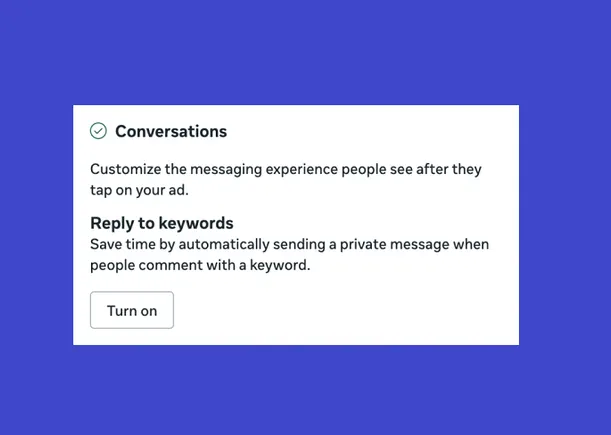
Meta Tests Feature That Automatically Sends a DM When Users Comment a Keyword on Instagram Ads
With the new "Reply to Keywords" feature, users who comment a preset keyword under an ad automatically receive a private message — reducing the need for manual replies.