TJX's T.J. Maxx and Marshalls Post Weakest Sales Growth in a Decade
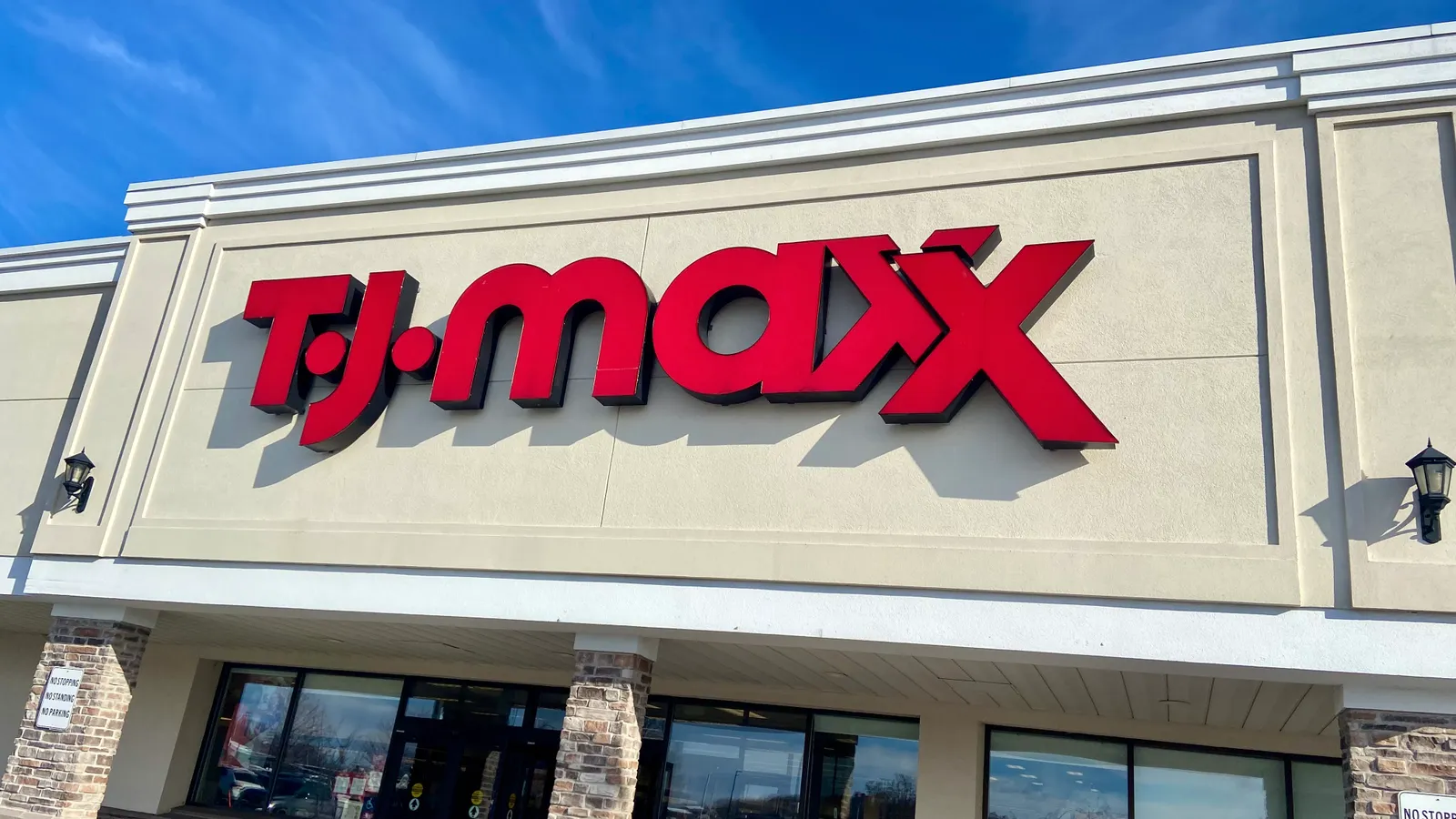
TJX Companies, the major U.S. off-price retailer, delivered an unexpected result on Wednesday: Marmaxx, the company's largest division, encompassing T.J. Maxx, Marshalls and Sierra, grew comparable sales by just 1% in the second quarter — well below both analyst forecasts and the company's own guidance.
That figure was 6% the previous quarter and 3% a year earlier. Marmaxx's net sales rose 3% to $9.1 billion, driven by new store openings. CEO Ernie Herrman attributed the weak performance to missteps in merchandise selection. "It was more about what wasn't in the assortment," he told analysts on Wednesday's earnings call.
Overall, the company turned in a solid performance: total net sales grew 5.4% to more than $15 billion. HomeGoods sales in the U.S. rose 10%, the Canadian division grew 6%, and Europe and Australia climbed 11%. Net income rose 22% to $1.5 billion, boosted by a tariff refund — the company recovered $331 million.
Analysts say Marmaxx's weakness can't be pinned solely on merchandising problems. Neil Saunders, managing director at GlobalData, said some spending shifted elsewhere in the second quarter — to Amazon's Prime Day and other discount events, among other things — while competition intensified from rivals like Ross and Nordstrom Rack, and traditional apparel chains also ramped up their own discounting.
Herrman said improvement was already visible early in the third quarter and that he expects "more meaningful improvement" by the holiday shopping season. He also acknowledged that the numbers looked the same regardless of whether competition was present, suggesting the problem lies in the company's own execution. "That's both the good news and the bad news — it shows this is on us," he said.
Wells Fargo analyst Ike Boruchow noted that the last time Marmaxx's numbers were this weak — nearly a decade ago — the company was slow to diagnose the problem and took nine months to fully fix it. "We're not out of the woods yet," he wrote.
Related articles

Why Is Customer Service Quality Declining? An American Entrepreneur's Observations
Nearly every company promises "top-notch service," yet customers keep coming away dissatisfied from encounters with hospitality, retail and call centers — a problem that has deepened across employees of all age groups since the 2020 pandemic.

How to Ask for Google Reviews and How to Respond to Them
Google reviews are one of the fastest ways to boost visibility in local search and earn customer trust. How should you ask for them, and how should you respond?

Target's Profit Doubles: Ad Network Roundel and Same-Day Delivery Drive the Growth
Target's Q2 net income hit $1.87 billion, while ad network Roundel's revenue climbed 28.6%.