Elliott Hill Returned to Save Nike, But the Road Is Still Long
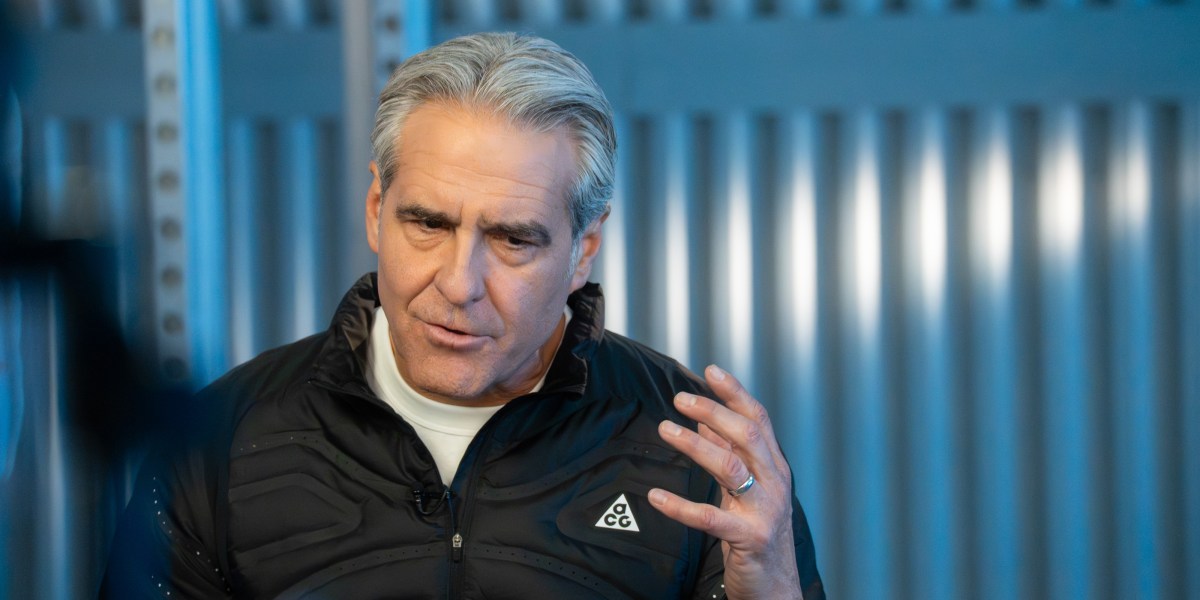
In September 2024, Nike announced one of the most unexpected decisions in its history: Elliott Hill, who had spent 32 years at the company before retiring in 2020, replaced John Donahoe as chief executive officer. The news spread like lightning across the company's 400-acre headquarters in Beaverton, Oregon — employees exchanged joyful high-fives, and a wave of excitement swept through group chats and social media. Investors on Wall Street welcomed the news too: Nike shares jumped nearly 8% in after-hours trading following the announcement. That joy wasn't only about Donahoe's departure — Hill's return was received almost as a rescue mission, since Nike had for several years been experiencing a slowdown in innovation, deteriorating relationships with retailers, and an erosion of the cultural standing that was once unmatched.
Hill joined Nike as an intern in 1988 and, working his way up through sales and leadership roles in North America and Europe, rose to president of consumer and marketplace. When he retired in 2020, he was credited with helping grow the company's business to roughly $39 billion. For Nike's board, the choice made sense: the company was getting not just a crisis-fixing leader but was also effectively "buying time." Hill didn't need to spend his first year learning the company — he already knew how Nike worked, and therefore where it had gone wrong.
Nearly two years later, hopes for a "savior" have collided with the scale of Nike's problems. Hill rebuilt relationships with wholesale partners, reined in the glut of popular sneaker models that had flooded the market, and redirected funding back into sports innovation. Wholesale has returned to growth, and running division numbers are also showing signs of strengthening. Even so, investors remain skeptical: the initial excitement around Hill's appointment faded long ago, and the stock now trades around $40 — half its 52-week high and a much smaller fraction of its 2021 peak. That decline has made Nike the cheapest company by share price in the Dow Jones Industrial Average and has fueled speculation that it could even be dropped from the index. Neil Saunders, managing director at GlobalData Retail, puts it this way: "The initial excitement around the appointment has now given way to the realization that this is a long and grueling process. There are no quick fixes here."
Nike's latest financial report shows that Hill's early wins have not yet meaningfully changed the company's overall trajectory. Fourth-quarter revenue fell 1% to $11 billion, but more troubling is that the weakness spread across nearly every segment. Nike Direct — the company's own, directly controlled sales channel, which Donahoe once saw as the company's future — fell 7%, digital sales dropped 12%, and revenue at Nike-owned stores declined 7%. China and Europe are also posting weak results, with revenue in China falling for eight consecutive quarters. By contrast, the running division has posted double-digit growth for five straight quarters, adding an extra $1 billion in revenue over that period, while wholesale grew 4% in the fourth quarter to reach $6.6 billion, driven by Nike's restored relationships with retailers such as Dick's Sporting Goods, its Foot Locker business, and JD Sports. But this is largely just recovering business the company lost through its own strategic missteps — the harder question facing Hill remains unanswered: where will Nike find meaningful new growth? The company itself says it's too early to judge: a spokesperson told Fortune, "We've been clear that change won't be linear and that significant shifts are needed to ensure Nike, Inc.'s long-term leadership. We're not managing to short-term results that could undermine the strength of the brand."
Beyond the financial numbers, Hill's central test is Nike's fading cultural influence. For decades, the company tied elite-level sport to everyday life, getting millions of people who would never come close to professional-athlete performance to wear the same sneakers. But that mechanism no longer works as reliably as it once did: while Nike spent years emphasizing footwear built for serious athletes, competitors like Hoka, On, New Balance, and Asics learned to better meet demand for comfortable, stylish everyday shoes, while Alo and Vuori redefined athletic wear as a format that moves from the gym into daily life. Saunders believes Nike is trying to "fish from two different ponds" — one where technical performance and athletic credibility matter (sport), and another where footwear has become an expression of personal taste (lifestyle) — and it's in the latter where its problems run deeper. "Nike has lost its edge," he says. "It's not entirely clear right now what Nike actually stands for." Simeon Siegel, senior managing director at Guggenheim Partners, takes a different view: annual revenue exceeding $45 billion shows that consumer demand for Nike remains strong. "Whether people like Nike or not is a separate question, but the fact that they're buying Nike is a fact, not an opinion," Siegel says. Still, sales figures don't fully capture the brand's cultural influence in an increasingly fragmented market: "How can Nike get people not just to buy the product, but to fall in love with it again?" Siegel asks.
When it comes to winning over the younger generation, Jordan Brand has become the proving ground for this very strategy. For millennials, Michael Jordan was a living cultural icon, while Gen Z never witnessed his actual dominance and inherited only his symbolic image. Saunders notes that the brand is "not as healthy as it once was," and for younger shoppers Jordan "no longer holds any real contemporary appeal." That's why Hill is deliberately limiting supply of classic retro models like the Jordan 1, forgoing short-term sales in an effort to restore the scarcity that made the brand famous in the first place — even as many Jordan models fail to generate their old excitement on the resale market, while Adidas's retro models are enjoying rising interest. Meanwhile, among women, Nike also lacks the cultural standing of competitors like Lululemon and Alo, since the brand remains largely male-focused: those competitors have built their identities around women consumers, while Nike has addressed women mainly through separate product categories — leggings, sports bras, footwear. The NikeSKIMS partnership seemed designed to fill exactly that gap, but the initial buzz, in Saunders's words, "made a big splash, then faded" — he compares Nike's "stop-start" approach to steadier-paced brands like Levi's, Coach, and Ralph Lauren. China, meanwhile, has become the market that most clearly shows how outdated Nike's old strategy has become: local competitors are moving faster, consumers are growing more demanding, and Nike is grappling with excess inventory, steep discounting, and products that don't match local shoppers' tastes — resulting in revenue declines for eight consecutive quarters. "You can't fix Nike without fixing China," Saunders says, "and China is still a long way from being fixed." Even at major sporting events where Nike should have a natural advantage — such as the World Cup held on its home turf — the brand's presence fell short of expectations, with some stores running short on Nike merchandise while Adidas team gear remained readily available.
All of this adds up to a complicated verdict on Hill. At an organization as vast and sprawling as Nike, there was a clear logic to picking an insider: an outside leader would have spent a great deal of time learning the company's structure, politics, and levers of power, whereas Hill drew on his institutional knowledge to start fixing specific problems right away. But that knowledge needs to be paired with a strong outside perspective on branding and culture. Siegel is skeptical that a turnaround of this scale can hinge on a single leader: "Under the right conditions, a lot of people could turn Nike around," he says. "Under the wrong conditions, no one could." With a market value of roughly $60 billion, Nike remains the world's largest sportswear brand, but that very scale makes it the biggest target for competitors — as Saunders puts it, "Nike has the biggest surface area to attack." Hill and Nike may eventually have to accept that the company's future market share could be smaller — and, rather than chasing its former volume relentlessly, consider that a smaller but more culturally powerful and more profitable company could be a better outcome. That's not an easy message to sell to investors accustomed to treating growth as the measure of health. Time still matters: rebuilding product cycles and wholesale relationships, working through excess inventory, and fixing China all require a gradual approach rather than a single quarter's fix. But time alone won't solve Nike's core problem: restoring the Nike that conquered the last generation may not be enough to conquer this one.
Related articles

Why Celebrity-Founded Brands Keep Shutting Down
Messi's and Alex Cooper's drink brands, Mas+ and Unwell, are shutting down less than two years after launch. Analysts point to a widening gap between celebrity fame and consumer trust.

Four Brands Apologized in Two Weeks: Does It Help?
Major brands including Neutrogena, Target and Good Good Golf have been forced into a string of public apologies over the past two weeks, prompting experts to ask whether these apologies can actually restore customer trust.

Athleta Rebuilds Its Brand Around a "Women's World" Concept
Gap successfully revived its own brand — now it's applying the same formula to its "sister" brand, Athleta.