More Than 1 Million People Flag AI Slop on LinkedIn
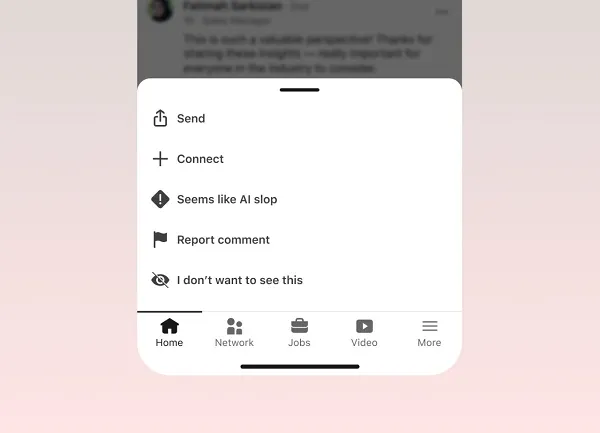
Earlier this month, LinkedIn introduced an in-app button that lets users flag posts marked as "AI slop" — content the platform describes as low-substance and low-effort. According to Hari Srinivasan, the company's chief product officer, more than 1 million users made use of the feature within its first two weeks.
Sam Corrao Clannon, LinkedIn's head of creator products, defines "AI slop" as text that looks polished and well-crafted on the surface but offers no personal experience, perspective or original thought — content posted purely to take up space and grab attention. The feature isn't aimed at people using AI to polish their writing; it targets useless, "slop" posts specifically.
Importantly, flagging a post doesn't automatically affect its overall distribution — it only changes what the flagging user sees in their own feed. Srinivasan notes that no single signal determines how far content spreads; the platform weighs many factors together and has safeguards against coordinated, bad-faith attacks.
Still, the impact is measurable: content LinkedIn classifies as AI slop has seen views drop by 40% over the past few weeks. Users who receive a high volume of complaints get a special notification — a warning rather than a punishment. At the same time, LinkedIn is encouraging users to complete identity verification confirming they're real people, using it as one more signal for filtering content — all part of an effort to stay ahead of the rising tide of empty AI-generated content.
Related articles

Brands Care About Fit, Not Follower Count — New Creator Marketing Research
New research from CreatorIQ shows brands rank brand fit above all else when choosing a creator to work with, placing follower count dead last. Yet pay still tracks follower count closely.

Google Now "Builds" a Full Interface Right in Search Results — What It Means for Site Owners
Google's generative UI technology is rolling out to AI Overviews: the search engine now builds an interactive calculator or visualization on the fly, based on your query. Google's own research shows what that means for websites.

Google Wraps Up Its August 2026 Spam Update: What It Means for Your Site
Google finished rolling out its latest spam update, which began on August 18, by August 21. It's the third such update this year — and it applies globally, across all languages.