The $8.3 billion startup: how crime-solving cameras became the face of the 'surveillance economy'
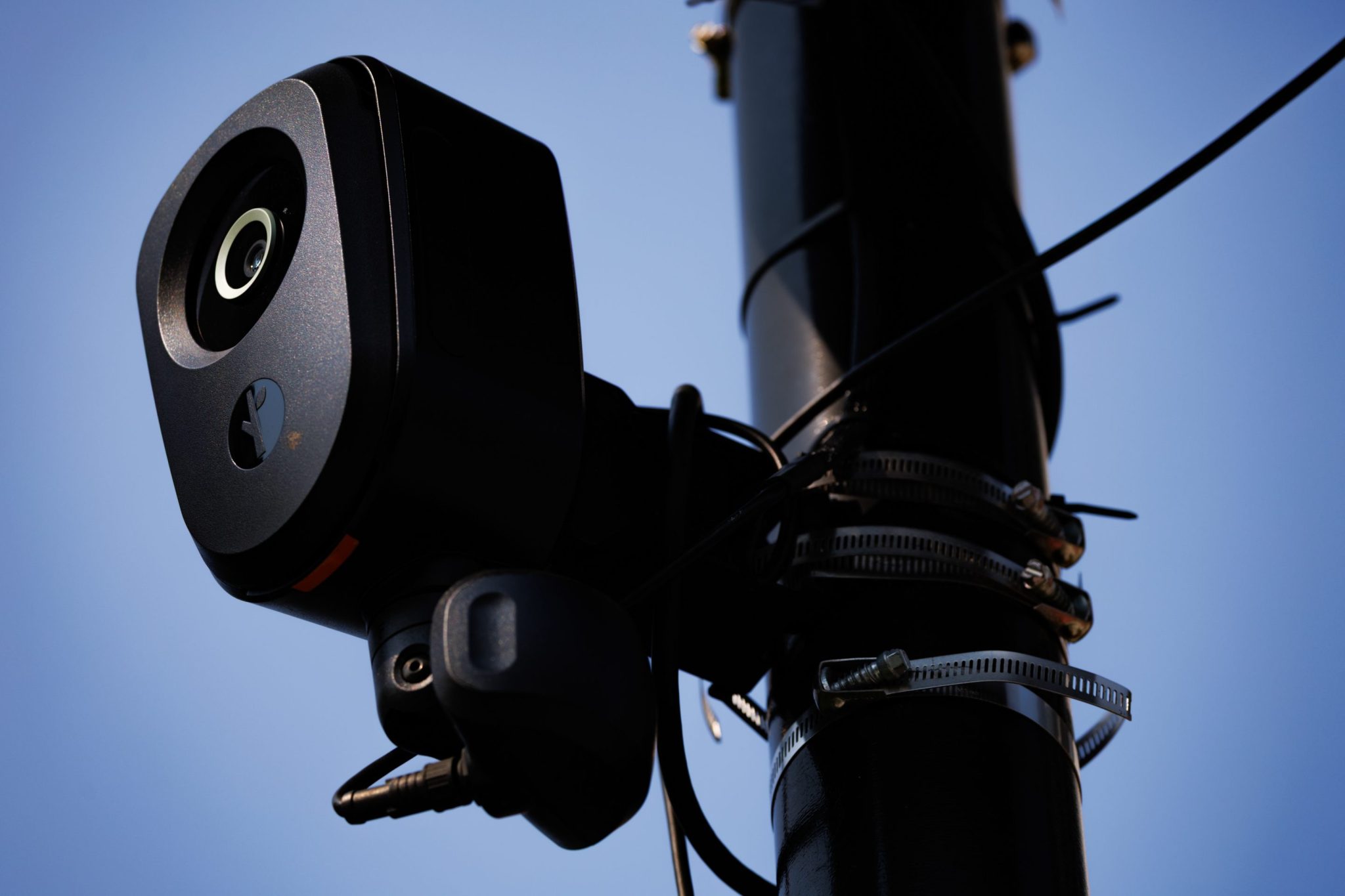
On December 13, 2025, a stranger in a bathroom at Brown University noticed a guy dressed all in black — clothing all wrong for the weather; hours later, that same person opened fire on campus, killing two and wounding eight. Investigators had almost nothing to go on: no name, no license plate — just one tip about a gray Nissan with Florida plates. But that was enough: Providence police checked Flock Safety's network of more than 70 cameras, found the car had passed by 14 times since early December, and tracked it to where the suspect was hiding in under a week.
But at almost the same time, another case exposed the technology's dark side: a Florida police officer, Christopher Goodson, used Flock data to stalk his ex-wife, filing more than 700 unauthorized searches between September 2024 and June 2026, and was recently arrested.
Flock Safety has spent nine years promising to solve crime — and in the process has built what may be the most sweeping surveillance network in American history. The company's solar-powered cameras record the plate, make, model, and color of every passing car in more than 5,000 communities across 49 states, letting police officers search that data in natural language — say, by car color or bumper sticker — across thousands of jurisdictions at once.
It has turned out to be a very lucrative business. Backed by major venture firms including a16z and Tiger Global, Flock raised $500 million in April at an $8.3 billion valuation, bringing total funding to $1.2 billion, with annual recurring revenue topping $500 million in the first half of 2026. Founder Garrett Langley, an electrical engineer who was the victim of a string of home burglaries outside Atlanta, came up with the idea after seeing local police lack enough evidence to solve the case, and built the first prototype with colleagues in three weeks.
But success has bred backlash: in at least 36 states, residents have damaged or spray-painted the cameras, and 82 contracts have been canceled since 2021. Privacy attorney Anne Toomey McKenna calls this kind of surveillance 'a persistent, pervasive surveillance environment the Fourth Amendment was never designed for.'
Flock CEO Langley counters the criticism by pointing out that the company helps find missing children and solve murders and violent crimes every day, and that this remains the company's core mission. The company has also recommended shortening its data-retention policy from a standard 30 days to 7. But an internal audit by the Los Angeles Police Department found that under some of the company's contracts, data can be retained for up to five years — 'at Flock's discretion, for any purpose' — 260 times longer than the recommended period.
Flock's story offers a pointed lesson for startups: selling a product as a public good is easy, but that very power and reach — the core advantage that fueled the company's growth — can just as easily curdle into a crisis of trust. Today, courts and city councils are wrestling with the same question: where is the line between public safety and personal freedom?
Related articles

Asian entrepreneurs are going global before they've even nailed down a business model
According to Stripe's regional head for Southeast Asia, Greater China and South Korea, Sarita Sing, AI-based Singapore companies expand into an average of seven new markets within just one year of founding.
They Started a Blog on $2.95 Hosting — Now They Make Over a Million a Year
Kaelan and Brittany Klein turned a blog that earned nothing for nine months into a seven-figure business. They share the four main ways they make money online.

Registering a Company Got Easier, But Building a Business Didn't
Digital registration services have simplified the process of forming a legal entity, but they cannot create demand or build the systems that keep a business running.