Burger King Overhauled Its Strategy — And It's Paying Off
In the second quarter of 2026, Burger King's U.S. same-store sales grew 8.5%, while McDonald's managed only a 0.8% increase and Wendy's sales fell 7%. It's not just a win for Burger King's new strategy — it's proof that the 'burger wars' are still very much alive.
The main driver behind this renewed competition is rising prices. Fast food is no longer something you can pay for with loose change from your car's cupholder: the '$1 menu' has become the '$3 menu,' making customers far pickier. McDonald's, whose U.S. footprint is roughly twice the size of Wendy's or Burger King's, can no longer count on being seen as the automatic 'best value' choice.
Customers are now looking for alternatives at both ends of the price spectrum: those wanting to save money are turning to gas stations and grocery stores, while those willing to spend a bit more are choosing sit-down restaurants — Chili's, for instance, has successfully created a dish resembling McDonald's Quarter Pounder. 'We never would have called Chili's a McDonald's competitor before,' says Mike Perry, founder of Tavern, an agency that works with restaurant and hospitality clients.
How did Burger King step up its game? It all started earlier this year with a new advertising campaign: the company openly admitted its mistakes and even 'fired' its own mascot, the King. At the same time, the iconic Whopper got a makeover — not just in ingredients but in packaging too: the burger is now boxed instead of wrapped in paper, since a squashed burger only tastes good right after it's made.
Early results point to a winner: sales of the redesigned Whopper are up 20% compared to the old version. Dropping the King turned out not to be a loss of the crown for Burger King, but a move to win it back.
Related articles

Can Boring Industries Be a Goldmine? One Entrepreneur's Experience
BriteCo CEO Dustin Lemick argues that the most defensible, highest-margin businesses are often built in the 'boring' industries nobody wants to talk about — he proved it himself in the jewelry insurance market.

Marketing Data Isn't Oil Anymore, It's Uranium: Too Much Data Is the Problem, Not the Solution
For years, marketers have compared data to oil. Marco's Pizza's marketing director offers a different, far more accurate comparison.
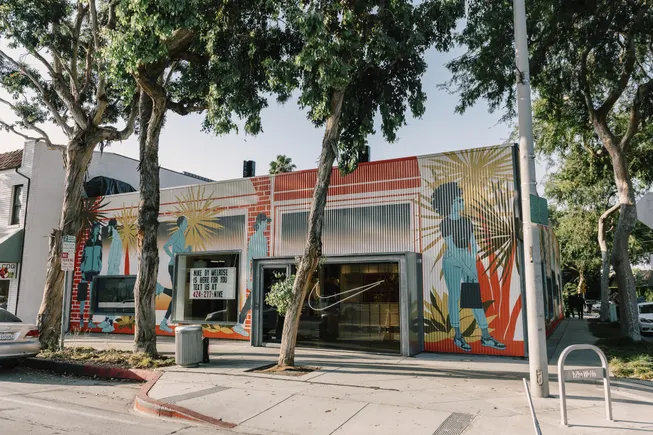
Nike Is Quietly Closing Its Small-Format Neighborhood Stores
Nike Live, launched in 2018 as a hyperlocal retail format, has now closed at least 15 locations — the company frames it as part of a broader review of its store network.